Working to protect the Mississippi River and its watershed in the Twin Cities area

Asian carp news and lock closure poll results

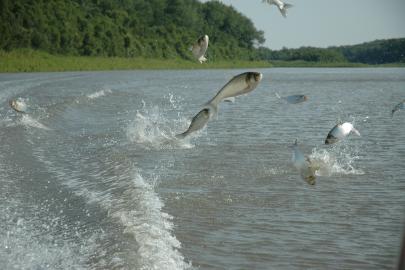
Efforts to fend off the Asian carp invasion are receiving a good deal of media attention these days. However, while some proposed strategies to control the invasive species are moving along quickly, others remain stagnant. Meanwhile the dreaded fish continues to leap and bound upstream.

Below is a roundup of the latest Asian carp developments — from their spread to Congressional action (or inaction) to the potential closure of the St. Anthony Falls Lock — a move supported by the majority of respondents to FMR’s ongoing poll (see right) "Should we lock the locks?"

Asian carp on the move

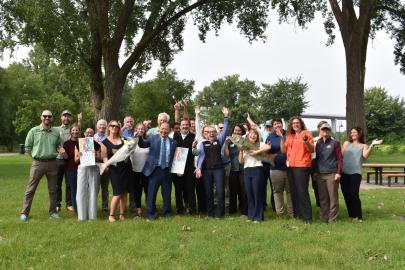
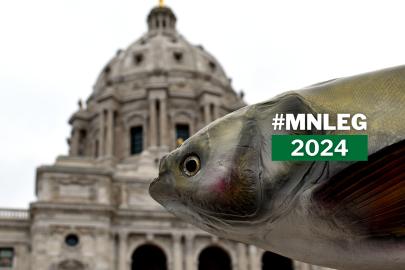
March 1st, three fishermen held up the Asian carp they caught on the Mississippi River near Winona, a photo was snapped and Minnesota’s much-needed poster child for stopping the Asian carp invasion was born. The image and news of the fishermen’s catch went viral and within days a bipartisan bill was introduced in Congress calling for the closure of Upper St. Anthony Falls lock in Minneapolis. Meanwhile, concerns continue to grow about the spread of Asian carp into tributaries of the Mississippi River, and even the potential for the agile fish to find pathways from one river basin to another.

Mississippi CARP Act introduced in March, includes lock closure

  • A bill was introduced in March in the U.S. House and Senate to address the invasion of Asian carp into Minnesota’s treasured waters. Six of Minnesota’s ten Federal lawmakers are co-authors on the bill. If you haven’t yet, please take a moment to thank them for their leadership and ask our four hold-out representatives to sign on. See "How you can Help" in our March update.
  • VIDEO: Congressman Paulsen talks Supreme Court and Asian carp, U.S. Congressman Erik Paulsen fields questions from constituents in Maple Grove and Plymouth, MapleGrovePatch.com, April 3, 2012

City of Minneapolis, National Park Service, FMR and others voluntarily reduce lockages

Stopping the Asian carp invasion is a complex issue. So it’s a bit ironic that the simplest, least expensive option for stopping the upstream spread of these marauding invaders is also the most controversial: closing the Upper St. Anthony Lock in Minneapolis. The CARP Act suggests this bold move, but only mandates closure once Asian carp are found upstream of Hastings. Some folks think waiting for either Asian carp (or for Congress) to move forward is not the best strategy, and have stepped up to reduce or eliminate their usage of the Upper St. Anthony Falls Lock and Lock #1 at the Ford Dam. (The Lower St. Anthony Falls dam is much lower and thus would not serve as a fish barrier.)

After Minneapolis Mayor R.T. Rybak vetoed an agreement between the Minneapolis Park & Recreation Board and Paradise Cruises, the company that operates a paddleboat from Boom Island, the park board renegotiated the agreement with the company not to use the locks. Mayor Rybak’s office is also pushing ahead with a plan to close the Upper Harbor Terminal/Port of Minneapolis within six months. The Minneapolis City Council will officially weigh in on this next month.

The National Park Service and Wilderness Inquiry were among the first organizations to eliminate "locking through" as part of their paddling programs, and they have been encouraging others to do the same. Although the locks are operated for the purpose of commercial navigation, recreational traffic makes up more than half of the vessels that lock through in Minneapolis. Likewise, FMR’s signature paddling event, the Mississippi River Challenge, features a new lock-free route this year and will start on the Minnesota River instead of Coon Rapids Dam.

Asian carp research boost?

A proposed University Aquatic Invasive Species Research Center appears to be headed for approval in the Minnesota State Legislature, assuming politics doesn’t get in the way. Dr. Peter Sorensen, a University of Minnesota professor known for his innovative research on common carp is ready to take on Asian carp at a new center dedicated to research ways to deter, attract and eradicate Asian carp, as well as other invasive species such as zebra mussels.

Installing barriers to slow Asian carp

Plans and funding are in the works for barriers to slow or stop upstream migration of the dreaded invasive species. At present, both the Minnesota House and Senate have passed bills that include funding to construct fish barriers on the Mississippi River in the Twin Cities, as well as funding for the research center. Gov. Dayton also supports the funding proposals. Some folks are advocating for electric barriers, but because of potential danger to boaters and other aquatic species, sonic/bubble barriers are also being considered.