
Wade into your watershed: Monitor stream health in the Rice Creek Watershed District
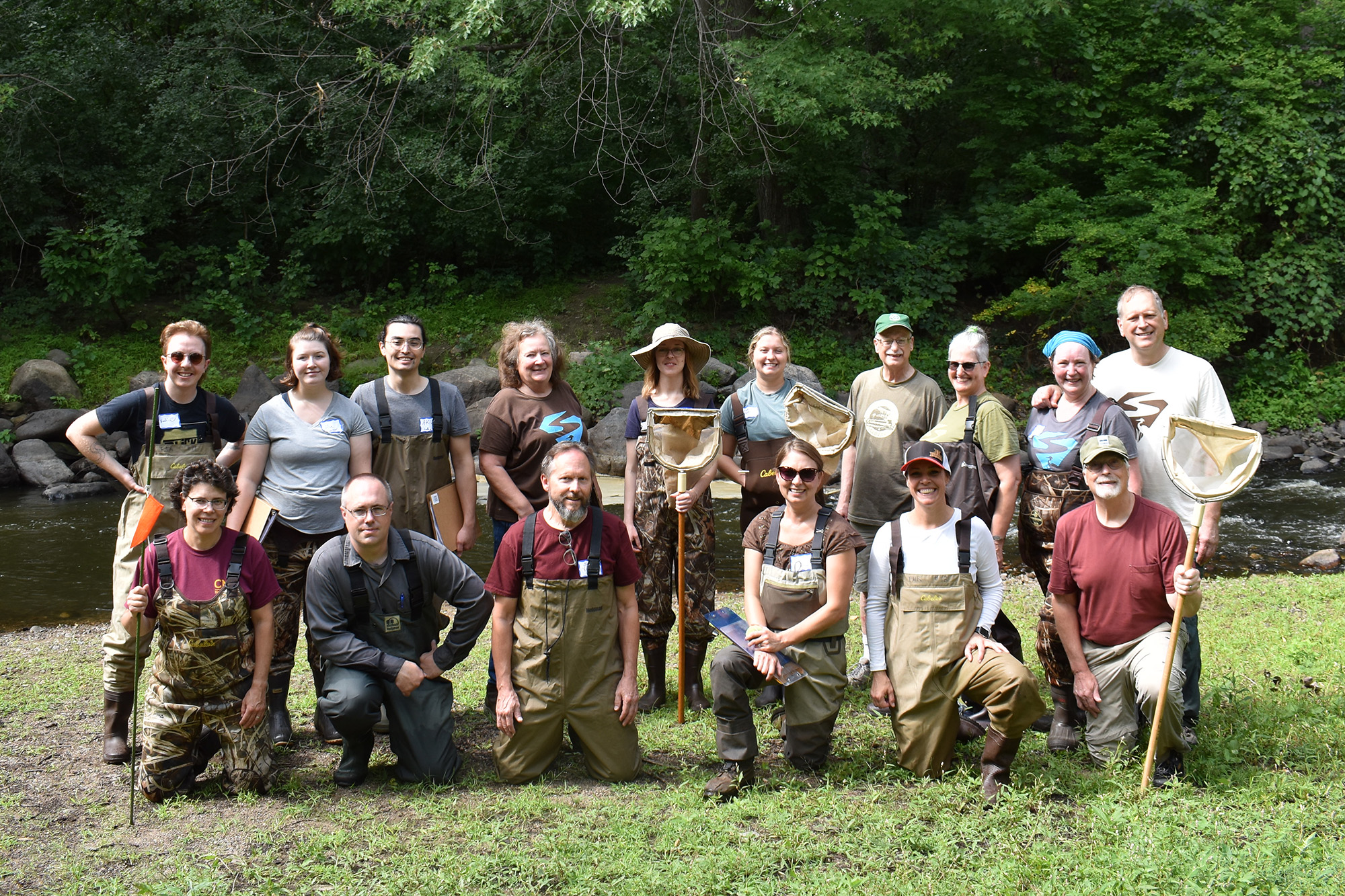
If you're looking for a rare, in-depth experience contributing to the health of your watershed without earning your master's degree, this is the perfect opportunity.
Since 2006, FMR has coordinated the Stream Health Evaluation Program (SHEP), in the Rice Creek Watershed District. Scientists train SHEP volunteers to evaluate stream biological health by sampling benthic macroinvertebrates, small stream-dwelling bugs, then studying these samples to assess stream quality. Volunteers contribute roughly 40 hours between August and December.
Preference is given to Rice Creek Watershed District residents. (Check here to see if you live in the watershed.) No experience is necessary, as training will be provided. All are welcome. However, potential volunteers should seriously consider the tasks (see accessibility notes below) and hours involved before committing to the SHEP program.
You can read more about the project on our SHEP project page. Below, find out what it's like to volunteer with this exciting, unique program.
Accessibility
Volunteers will spend time wading in streams, which will involve wearing waders, climbing down streambanks and walking in deep water across uneven streambeds. The lab portion of the program will involve using microscopes to identify macroinvertebrates. Volunteers are encouraged to attend and participate in whatever activities they are comfortable with.
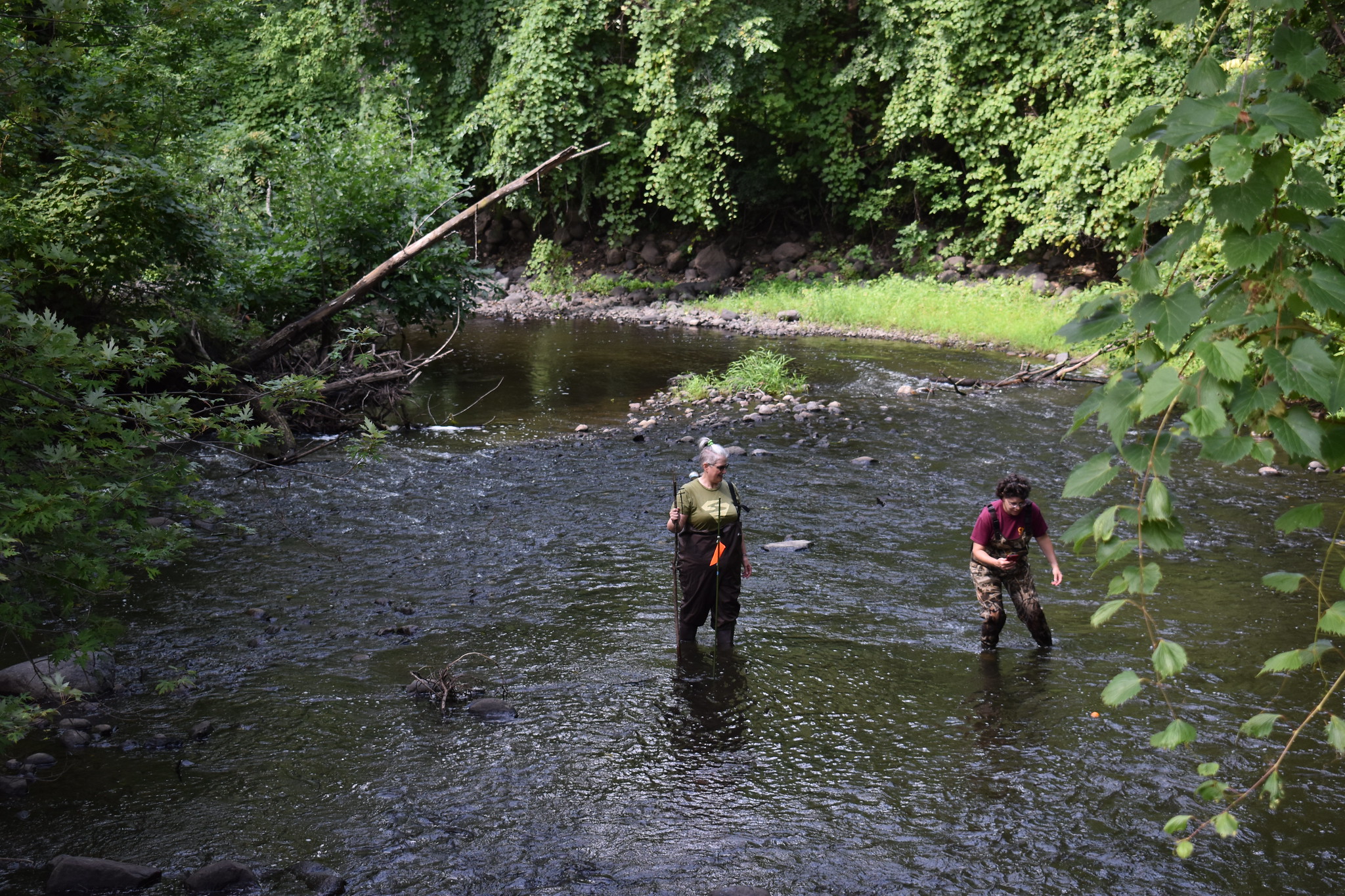
Stream Health Evaluation Program volunteers work together to collect data on stream health.
What to expect as a SHEP volunteer
- SHEP volunteers should expect to spend up to 40 hours on the program, including trainings, stream collections, lab time and the analysis and results celebration.
- Trainings will be led by professional scientists from Bolton & Menk and are scheduled for two four-hour sessions on Saturday mornings in August and October. Both sessions are required. There is no prep work. You will be in the hands of excellent trainers who will teach you everything you need to know at the training and throughout the program as well. (8-10 hours)
- At the trainings, you will also meet your team. Each volunteer is assigned to a team of 10. Assignments aim to ensure a variety of experience levels as well as schedule compatibility. Each team has a pre-determined leader who, among other duties, will coordinate the sampling and analysis schedule with you and the other team members. Typically, there is one team comprised of those available during the day and two teams who schedule SHEP activities for weeknights and weekends.
- Teams will monitor reaches of local streams and lakes in September and early October. We can provide waders, but you should expect to get wet. (8-12 hours; volunteers need not be at every sampling.)
- Teams identify collected macroinvertebrates in the lab from late October to November. (8-12 hours; not all volunteers are required to make every lab session.) Additional training and support will be provided closer to this time.
- Scientists review SHEP's work in December and submit a final report to the Rice Creek Watershed District, MPCA and others regarding the data and what it indicates for local water quality. The results announcement and celebration will be held the following spring or early summer. SHEP volunteers typically reach impressive accuracy levels of over 90%! (2-3 hours) See previous reports.
Do I have to buy anything?
No. All equipment and training materials will be provided, as well as dinner and/or refreshments as needed. We appreciate your time and commitment!
To apply to volunteer
If you are interested in joining SHEP, please fill out the form below or contact our volunteer coordinator at volunteer@fmr.org or 651-477-0925. Please include your name, address, phone number and any questions you may have.
As all informational materials are provided during training sessions, there is little additional information on the program provided beforehand. However, we would be delighted to speak with you to determine whether the program is a good match for your interests and abilities before you make any commitment.
Registrants will be emailed training dates and locations as soon as they are scheduled.
What about COVID-19?
We're watching the CDC and Minnesota Department of Health guidelines closely. If plans change based on their recommendations, we will be in touch with updates. (Be sure to add volunteer@fmr.org to your contacts so updates don't land in spam.) And we'll update this page if anything changes. (You can read more about our policies here.)
We have adapted SHEP during the pandemic, and we will remain flexible to ensure the safety of our volunteers.
We will offer gloves and hand sanitizer throughout the program. Volunteers are encouraged to bring their own masks and wear them when in close proximity to others.