
Blazing blooms!
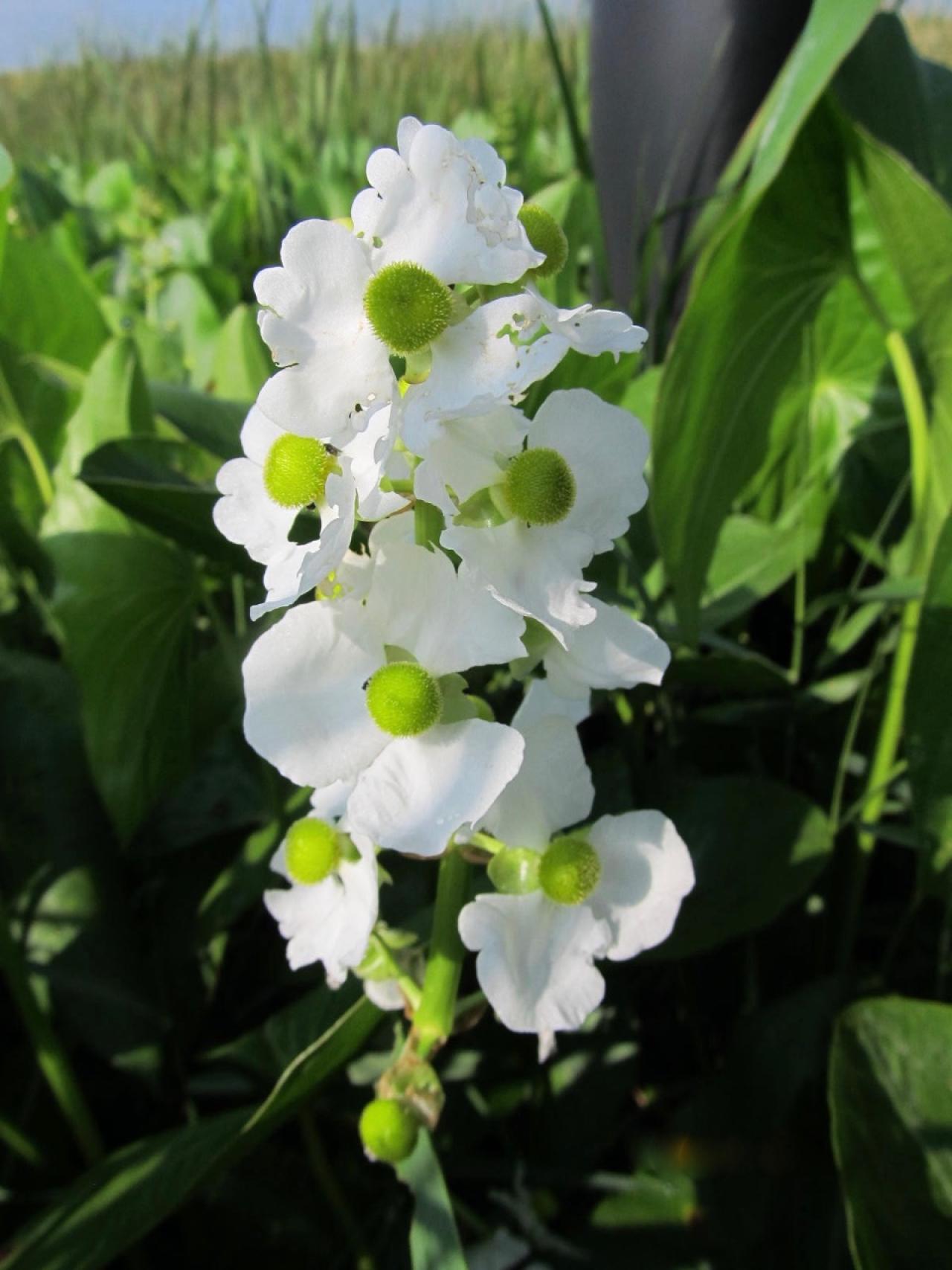
July and August are the most flowerful months in our native prairies and wetlands. Here's a few of the beauties FMR ecologists have come across at our restoration sites recently. Enjoy!
Giant bur-reed
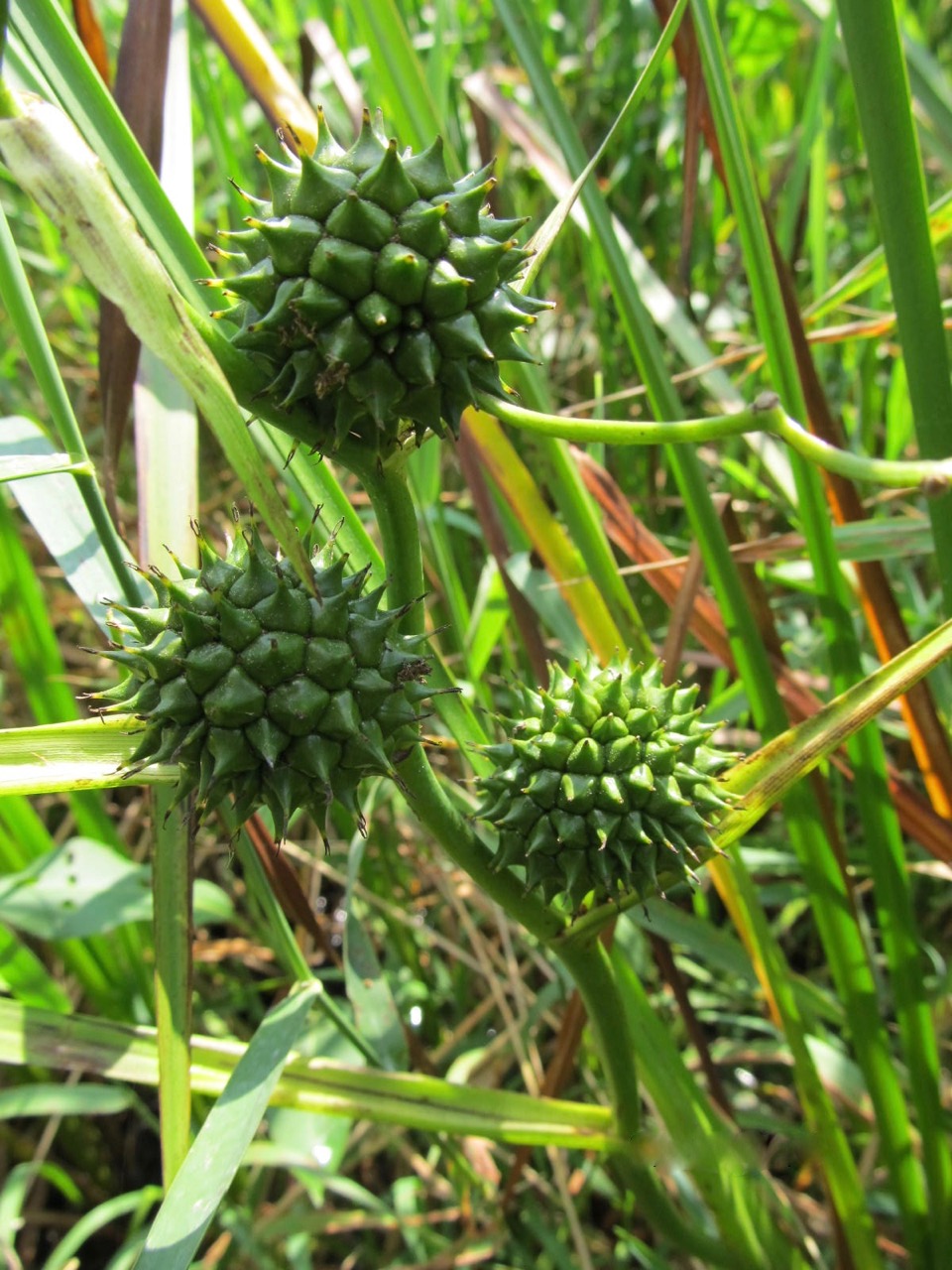
Native to lakeshores and wetlands, giant bur-reed (Sparganium eurycarpum) has some of the most fabulous seed pods! This perennial is also excellent food and habitat for waterfowl and other wildlife. (Muskrats and deer will eat the entire plant.) They are sometimes spotted in stormwater retention basins, where they're frequently planted to improve water quality by cleaning excess nutrients from the water.
Rattlesnake master
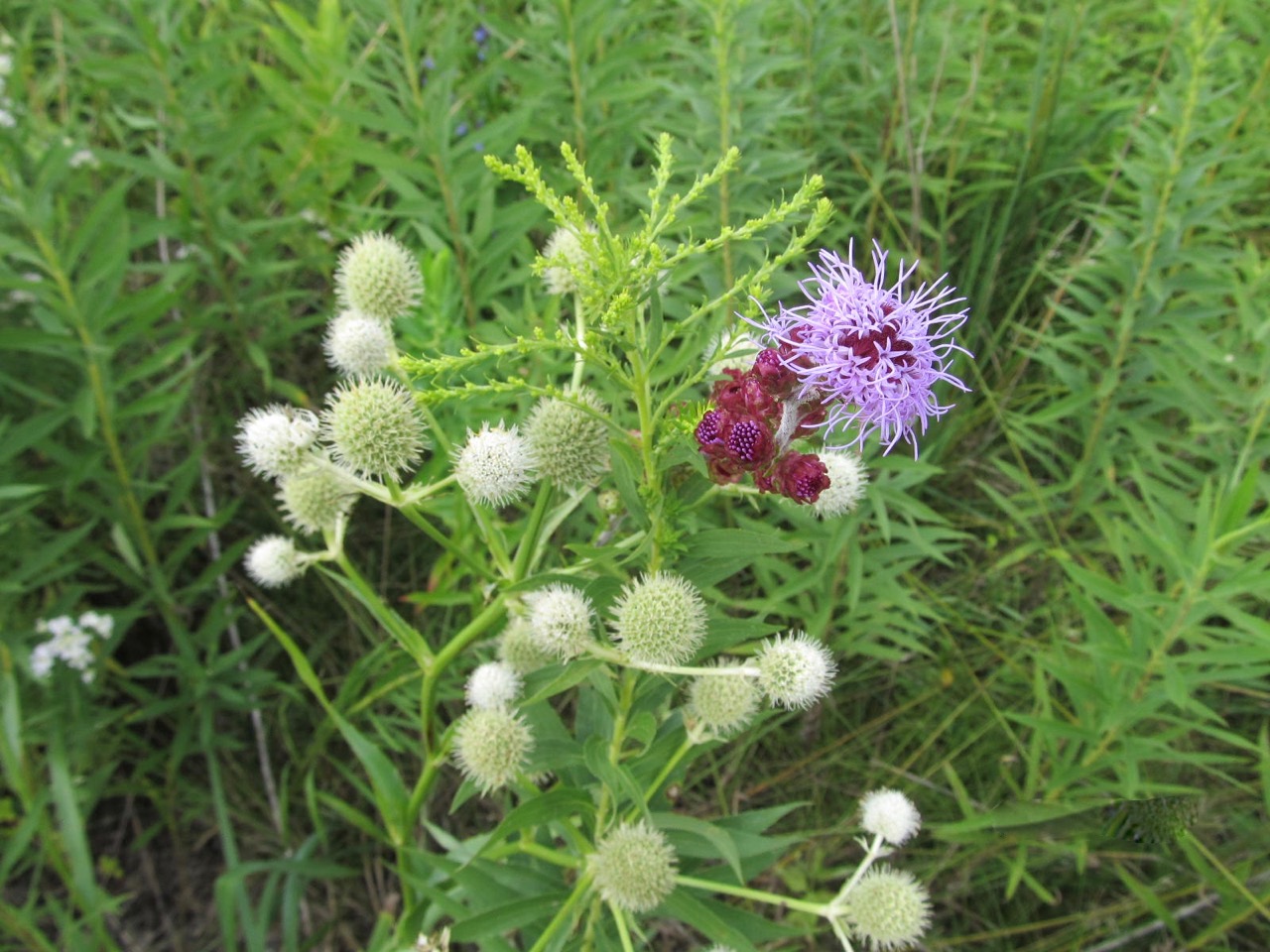
Rattlensnake master (Eryngium yuccifolium), with beautiful white pom-pom flowers, has spikey leaves that would seem more fitting in a southeastern desert. It is, however, a native prairie plant that is well-loved by pollinators! The purple blazing star (Liatris ligulostylis) is also popular with these important insects, especially monarch butterflies.
Three graces of the prairie
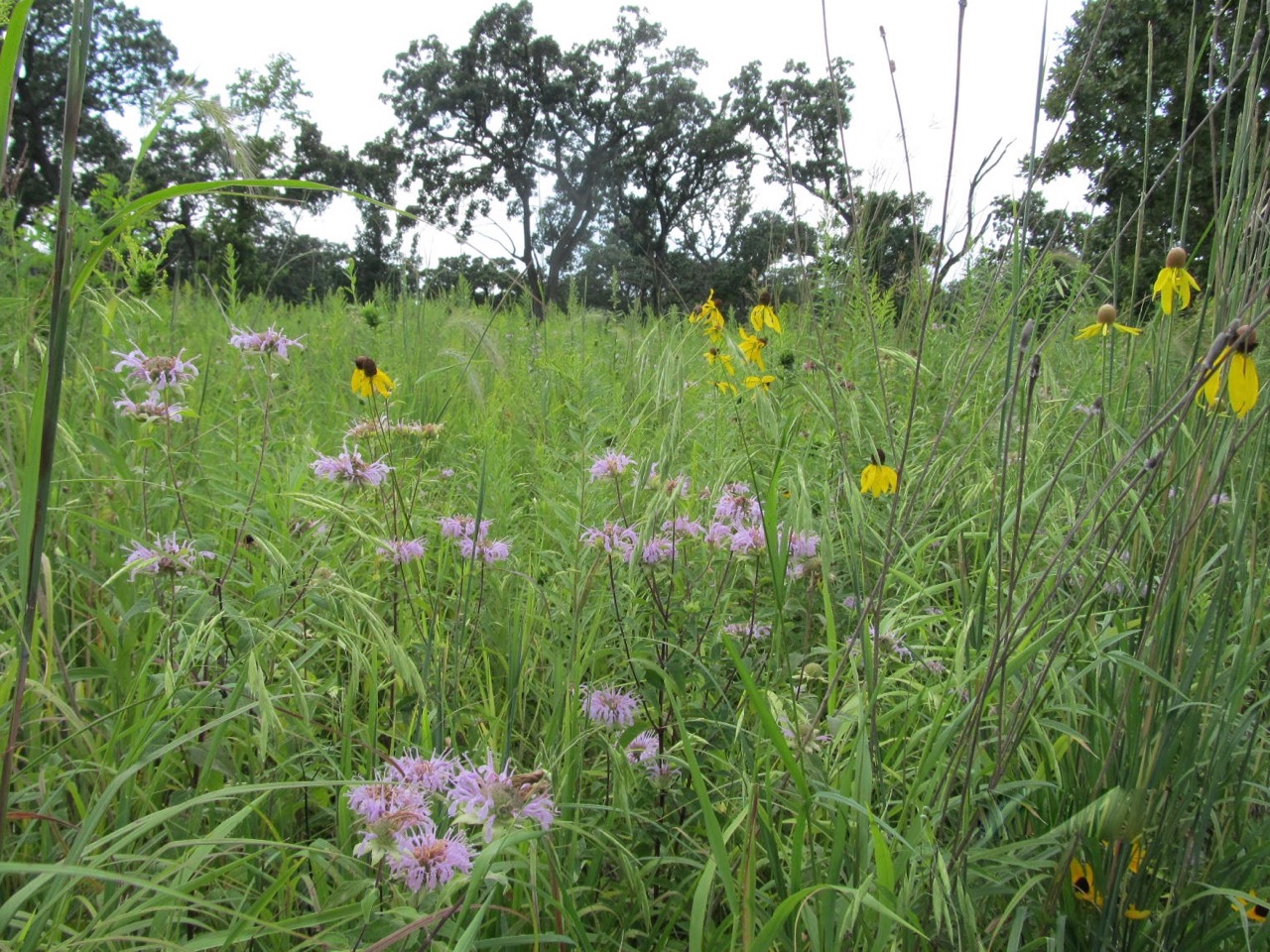
Yellow coneflower (Ratibida pinnata), bergamot (Monarda fistulosa), and black-eyed Susan (Rudbeckia hirta) are some of the most common prairie flowers. Bergamot is especially important for pollinators.
Blue vervain
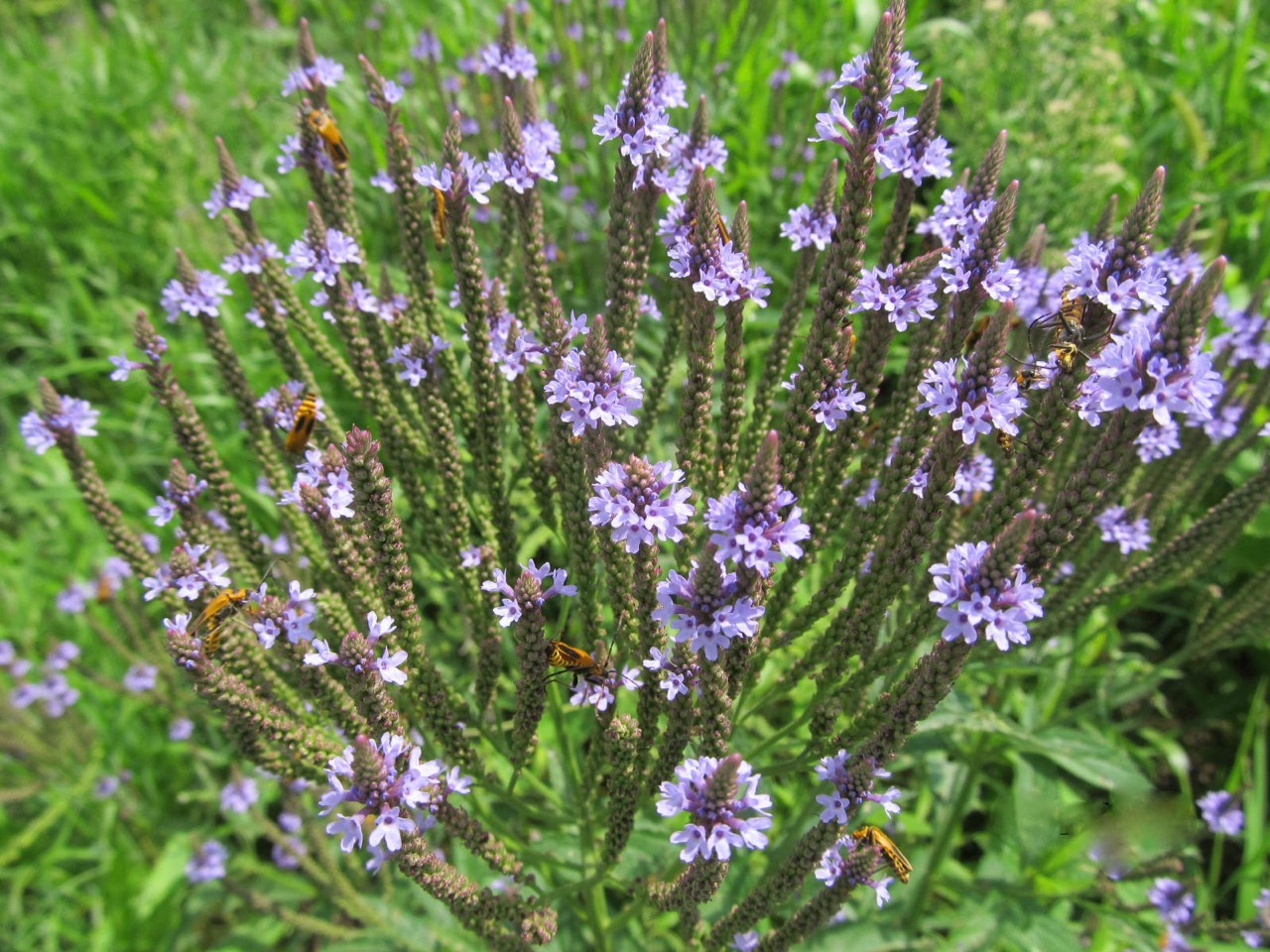
Soldier beetles can be seen swarming on this blue vervain. Their larvae can be beneficial to gardens as they feed on the eggs and young of other insects, aphids included. The adults feed on nectar and pollen and are important pollinators. Blue vervain is also a common replacement plant for purple loosestrife.
Want to go bloom-gazing on your own?
Consider two of our favorite FMR prairie restoration sites for this time of year: the Sand Coulee Scientific & Natural Area and Grey Cloud Dunes Scientific & Natural Area.