
Why we're encouraged by MN's new Nutrient Reduction Strategy
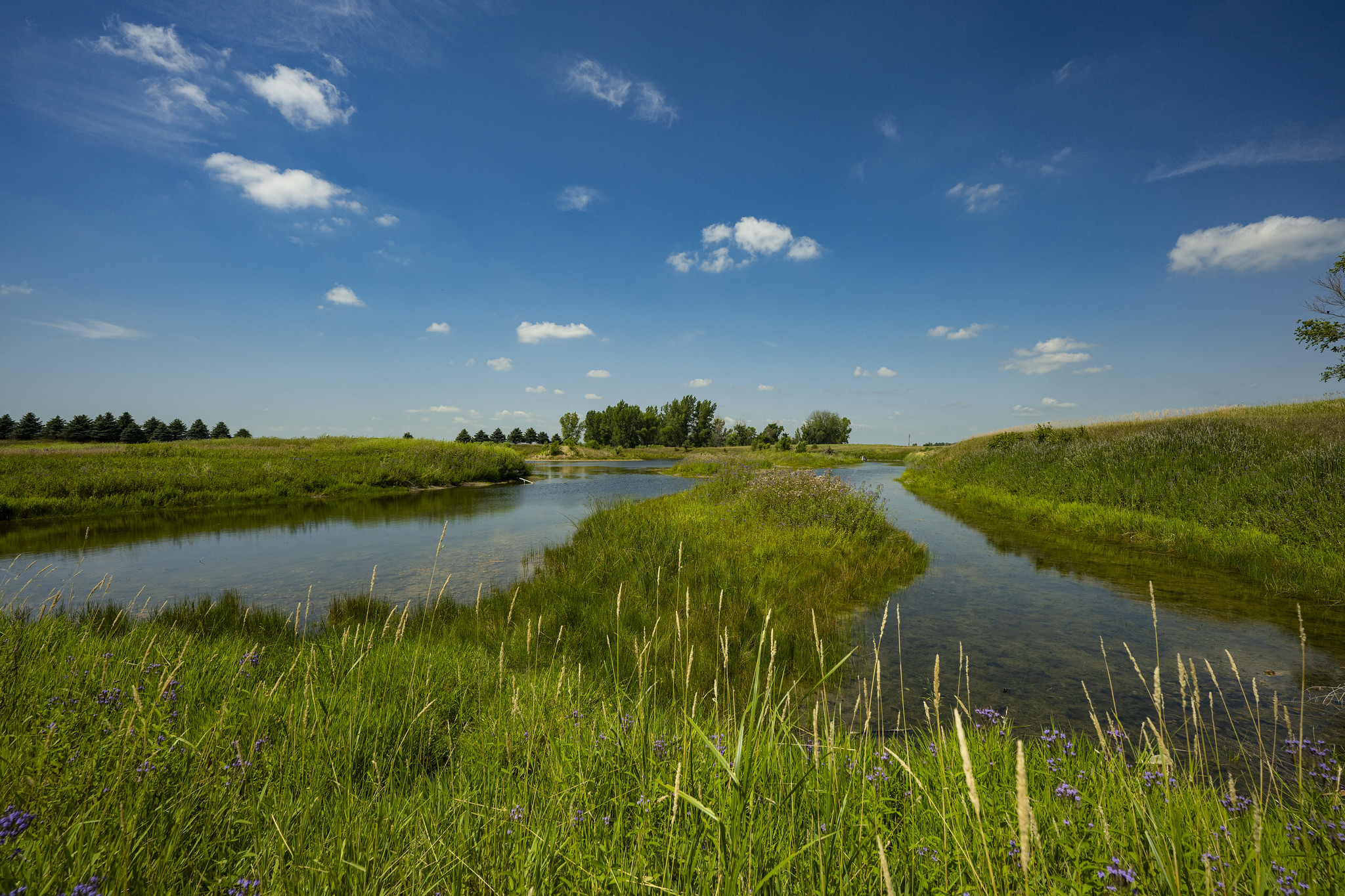
The updated strategy establishes continuous living cover and clean-water crops as essential pieces of a clean water puzzle. That's a very good thing. (Photo by Dodd Demas)
It’s not often we get to celebrate a real turning point in the pursuit of clean water. This looks to be one of those moments.
Last week, the Minnesota Pollution Control Agency released an updated version of the Nutrient Reduction Strategy. This is the state’s flagship plan to address the long-running nitrate and phosphorus pollution plaguing many of the state’s rivers, lakes and groundwater systems. (Think of it like a blueprint that will guide policy and investments long into the future.)
For more than a decade, FMR has been advocating for an approach that lifts up clean-water crops and allows the river to benefit from the resulting continuous living cover on the landscape.
We’re happy to report, this approach is heartily incorporated into the newly updated strategy. It establishes continuous living cover and the crops being developed by the Forever Green Initiative as essential pieces of a clean water puzzle. What’s more, the MPCA even adopted some of the suggestions we offered during last fall’s public comment period.
Below, we run through five key elements of the strategy and explain why they will be such a boon for the Mississippi River and its watershed.
• Leaning into continuous living cover
The final strategy leans heavily on the potential for continuous living cover systems to be adopted across millions of acres of Minnesota cropland. It lifts up CLC (as the term is often abbreviated) as a remedy not just for nitrate contamination but for a wide set of related goals — from habitat to climate resilience to soil health.
It represents a new chapter in the agencies’ approach to agricultural runoff pollution. The emphasis on CLCs is an acknowledgment that, without millions of acres of living plants on the agricultural landscape year-round, Minnesota has no shot at reaching its clean water goals.
It’s a validation of FMR’s approach to solving persistent water quality issues, and an endorsement of the work being done by the University of Minnesota’s Forever Green Initiative to get new CLC crops ready for a starring role. We’re happy it’s officially part of the state’s plan.
• Creating a new CLC campaign and working group
Like many strategic plans, the Nutrient Reduction Strategy doesn’t get into the nuts and bolts of implementation, and this is the case for most of the elements pertaining to CLC cropping systems.
Rather, the strategy tees up some crucial next steps: The creation of a "CLC Working Group" that will, in turn, create a CLC campaign to turn ideas into actions. The work group "should be organized to develop this campaign and identify specific next steps for developing living cover crops and their markets, as well as a phased strategy for promoting and implementing living cover practices during the next 15 to 25 years," the strategy says.
While this may strike some folks as a bureaucratic punt, we’re actually energized by the prospect of a thoughtful, structured process supported and legitimized by the state. Many of our ideas will be strengthened or stress-tested by such a process, particularly one that brings together conservation leaders with the business community, farmers and commodity organizations.
• Setting numeric goals for CLC acres
In our landmark 2023 report "Putting Down Roots", FMR and the Forever Green Partnership ran the numbers and found that, under a moderate adoption scenario, we could get around 8 million acres of CLC on the Minnesota farm landscape by 2050.
We encouraged the Nutrient Reduction Strategy team to adopt such a goal, but the final draft stops short of a full-throated endorsement, at least for the time being. The final strategy includes an initial goal of "an additional 1 million acres of CLCs, with the long-range aspirational goals of reaching over 10 million acres across Minnesota."
• A focus on market-based CLCs
The MPCA deserves credit for a subtle, but important, improvement made between the first draft and the final strategy. At FMR’s urging, the agency put an increased emphasis on "market-based" cropping systems. We’ve long held that economics is the leading factor influencing our farm landscape.
"Best management practices," even ones that result in more continuous living cover (like cover crops or prairie strips) cost farmers and taxpayers money. This makes it hard to scale up to the millions upon millions of acres under conservation management that we need.
A shift to harvestable, marketable crops that create CLC (think winter-hardy oilseeds, perennial grains, and tree crops) flips the equation on its head and turns an economic liability into an asset.
• Creating a new ‘CLC index' and dashboard
The strategy includes the development of a statewide "CLC index" that tracks CLC adoption (something we discussed in our 2023 "Putting Down Roots" report). That information will, in turn, be included in a dashboard to help the public track annual changes in living cover on agricultural lands over time.
Specifically, the strategy commits NRS partners to "work with the UMN and other academic institutions to develop methods to track CLC annually in the agricultural portion of Minnesota and track long-term changes on the minor watershed, major watershed, and basin scales. This information will be included in the future NRS dashboard."
From strategy to action
To see continuous living cover enshrined in the state’s official nutrient reduction plan, particularly after years of advocating for such an approach, feels momentous. This sets the stage for a more river-friendly agricultural landscape in Minnesota, one where live plants in the ground through fall, winter and spring can reduce runoff, bring down nutrient pollution and usher in new markets for farmers.
We’re grateful to the MPCA and peer agencies for their work to thoughtfully revise the Nutrient Reduction Strategy and put Minnesota on the path to clean water.
Turning strategy into action is how we make actual progress. There is still work for policymakers and key decision-makers, who will be tasked with implementing the CLC Working Group, and supporting it with long-term funding. FMR isn’t going anywhere. We’ll continue to be a voice for the river in these conversations for many years to come.

Video: Continuous living cover and the 'big brown spot'
Cropland runoff is the largest source of pollution to the Mississippi River. One of the most effective ways to address it is with continuous living cover — live plants and roots in the soil year-round. Learn more about how it works.