
Growing the market for more river-friendly agriculture
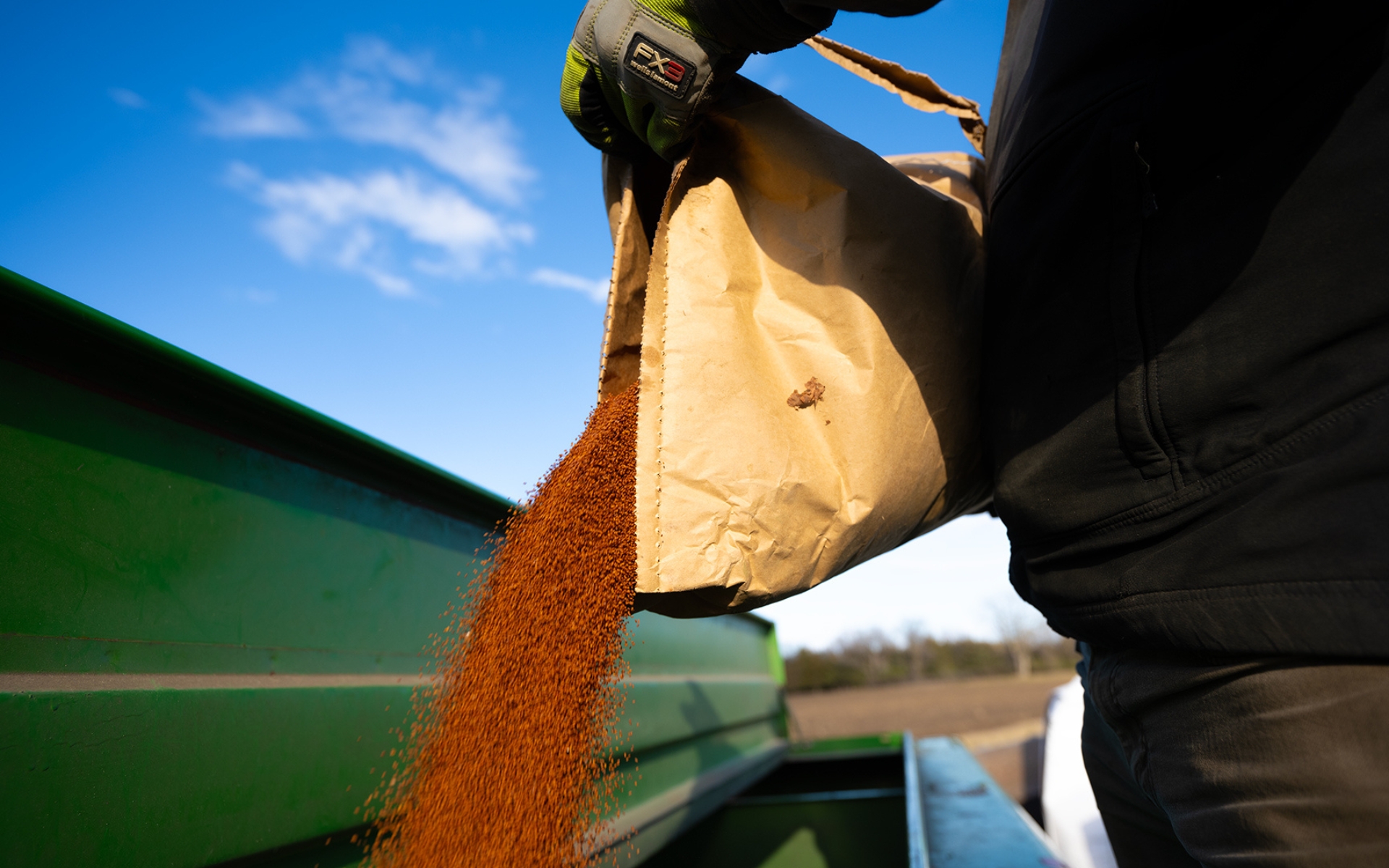
Market development grants allow entrepreneurs to focus on developing new products made with clean-water crops that provide continuous living cover. (Photo by Dodd Demas for FMR)
Numerous Minnesota businesses, cooperatives and nonprofts are getting an important financial boost as they work to bring Kernza, camelina, elderberries and other crops that provide continuous living cover to the marketplace.
The Minnesota Department of Agriculture (MDA) has announced the latest recipients of its CLC market development grants.
The goal of the grants (which River Guardians helped FMR successfully advocate for) is to more quickly strengthen what are called "value chain" organizations — the businesses and groups that are essential for getting a crop from a farm to a store shelf. That can include seed processors or food manufacturers, for example. Financial support during these early stages allows entrepreneurs to innovate and focus on making better products, in turn leading to more consumer demand, more acres of clean-water crops planted in Minnesota and, ultimately, a much healthier Mississippi River.
"Continuous living cover is one of the most promising strategies we have for building a more resilient agricultural future in Minnesota," said MDA Commissioner Thom Peterson in a news release announcing some of the grants.
For example: So far, we've seen a farmer build a bespoke winter camelina cleaning unit, a family-owned Minnesota nursery propagate 10,000 hazelnut shrubs, and a fast-growing Kernza food business open a new facility to meet demand. Read about these stories via Green Lands Blue Waters.
The first wave of grant recipients was announced in December of 2023, with additional waves revealed in June of 2024, March 2025 and January 2026. Learn more about the businesses and organizations, and how they plan to use the funds to support more sustainable agriculture:
Meet the grant recipients
Round 1
Perennial Promise Growers Cooperative — $50,000
The growers cooperative will use the funds to promote and market Kernza — leading to more demand and, as a result, more products featuring the perennial grain.
Regenerative Agriculture Alliance — $50,000
The organization will purchase a mechanical harvester and two de-husking units for two hazelnut grower networks in Minnesota. (Read more about the region's emerging hazelnut industry via AgWeek.)
Perennial Pantry — $50,000
A new processing plant in Northfield, Minnesota, will allow the business to increase production of clean-water crops products, such as Kernza crackers. The grant is being used to help get that facility up and running.
Midwest Elderberry Cooperative — $50,000
The grant will help the cooperative design, build and test a prototype of a new machine for more efficiently de-stemming elderberries.
Nine Hazels Farm — $29,657
Improvements to the farm's greenhouse operations will allow them to produce and sell seedling plugs for hybrid hazelnuts.
Dawson Drug & Gifts — $50,000
They plan to buy a new freeze dryer that will help expand the market for products made with clean-water crops — particularly fruits.
Round 2
Perennial Promise Growers Cooperative — $48,000
The cooperative will look to expand marketing to existing customers, while promoting Kernza grain to new customers.
River Rock Kitchen & Baking Co. — $50,000
This small business from St. Peter, Minnesota, aims to use Kernza in at least 75% of its baked goods.
Rookie Farmers, LLC — $50,000
Rookie Farmers, LLC plans to use the grant funds to purchase a cleaning trailer for winter camelina — the oilseed that, as the Star Tribune put it, "could save the Mississippi River."
Gertens — $50,000
The business has its eye on hybrid hazelnuts, and says it will use the grant money to propagate as many as 10,000 farm-ready hybrid hazelnut plants.
MSX Nexgen Inc. — $50,000
This grant money will be used to create a regional location where clean-water crops — including winter camelina Kernza and others as needed — can be pre-cleaned, dried and stored.
Round 3
Bang Brewing Company — $45,000
This St. Paul brewery will increase the percentage of Kernza it uses in its beer (part of its commitment to the The Land Institute's Perennial Percent program), as well as improve its marketing.
Estling Farms Inc — $45,000
This company plans to develop a seed cleaning line for clean-water crops that help provide continuous living cover — which will reduce the cost of seed for northern Minnesota farmers.
Midwest Elderberry Cooperative — $45,000
The cooperative will buy a used refrigerator for additional storage of harvested elderberries, and also pave the driveway of its regional hub to accommodate larger trucks.
Midwest Hazelnuts, LLC — $44,772
The funds will be used to set up an aggregation station at a Go First Farm in Minnesota.
Perennial Pantry — $45,000
The company is looking to increase capacity and sales of products made with clean-water crops, and will use the grant money to create marketing content and strategies.
Perennial Promise Growers Cooperative — $45,000
The cooperative will find and develop customers for Kernza products, provide samples for potential customers, fulfill orders and provide customer service with its funds.
Regenerative Agriculture Alliance — $35,865
This group will buy plant material from Midwest Hazelnut LLC, then distribute it among growers who are involved with the Poultry-Centered Regenerative Agroforestry ecosystem.
Sturdiwheat — $45,000
The Stillwater-based small business will tweak the recipes of its mixes to include 1-5% perennial grain flour, and also modify its packaging to highlight the inclusion.
SUN Consulting Inc. — $36,000
SUN Consulting will build a new cutter that will help with the harvesting of 2-year-old, farm-ready hazelnut plants in propagation beds.
Tree Range Farms — $45,000
Tree Range Farms raises slow-growth chickens that live in forested pastures, where they can forage on plants, sprouted grain and bugs — their natural diet. The farm will use the grant money to help market this type of poultry to schools, communities, retailers and restaurants in Minnesota.
Round 4
Announced by the MDA in January of 2026, this grant was funded through the Minnesota Climate Smart Food Systems Initiative. Eight businesses received a total of $492,679 in funding.
40 Century Grain — $60,228
The company is developing new products, including granolas with Minnesota-grown crops like hazelnuts, elderberries and currants, as well as Kernza flakes. It also established purchase agreements directly with Minnesota farmers who are growing clean-water crops.
Gerten Greenhouses — $74,610
Gerten is scaling up its hybrid hazelnut work, with an outdoor operation that will allow for up to 8,000 farm-ready hybrid hazelnut plants to be grown.
Ivy & Karma Inc. (Green Acres Milling) — $100,000
The business will use the funds to develop a new modern oat processing facility.
Midwest Hazelnuts, LLC — $30,881
Midwest Hazelnuts plans to expand its team in order to increase plant sales and help support nursery contracts.
Minnesota Native Landscapes — $42,500
A new brush machine will help Minnesota Native Landscapes more efficiently process continuous living cover crops — which means more, better seed will be available for farmers to grow.
MSX Nexgen Inc. — $49,000
An existing seed cleaner will get an upgrade. The addition of an auger and generator will allow the cleaner to be moved from farm to farm as a standalone unit.
Perennial Pantry — $100,000
This growing business has big plans for Kernza: A retail space at its Northfield bakery to make CLC products more accessible and affordable, new equipment to improve the production of Kernza flour and eventually a brick-and-mortar store dedicated to CLC crops.
Regenerative Agriculture Alliance — $35,460
The alliance will help get hybrid hazelnut seedlings and tree tubes to farmers that want to increase productivity and diversity on their farms. There are also plans to support hazelnut harvesting and training opportunities.
There's more to come
With consecutive years of support for the grants program, it's clear state leaders and decision-makers understand the value of these early investments as businesses navigate all the expected challenges of launching brand new products with very new crops. FMR continues to work alongside other members of the Forever Green Partnership in actively advocating for even more funding.
Another round is on the way: The state Legislature provided another tranche of funding in the 2025 session ($450,000 total) through the Environment & Natural Resources Trust Fund package. Expect an update on the application process and recipients in the near future.
"We are really grateful to the Department of Agriculture for all their work reviewing applications, identifying deserving projects and getting funds out to these farms, cooperatives, small businesses and other organizations working with clean-water crops," said FMR Agricultural Policy Manager Peter LaFontaine. "And of course to the state lawmakers who made this funding available multiple years in a row. We're looking forward to continuing to find these types of opportunities in the sessions ahead."
Agriculture updates
Become a River Guardian
Sign up and we'll email you when important river issues arise. We make it quick and easy to contact decision-makers. River Guardians are also invited to special social hours and other events about legislative and metro river corridor issues.