South Branch Vermillion River Aquatic Management Area
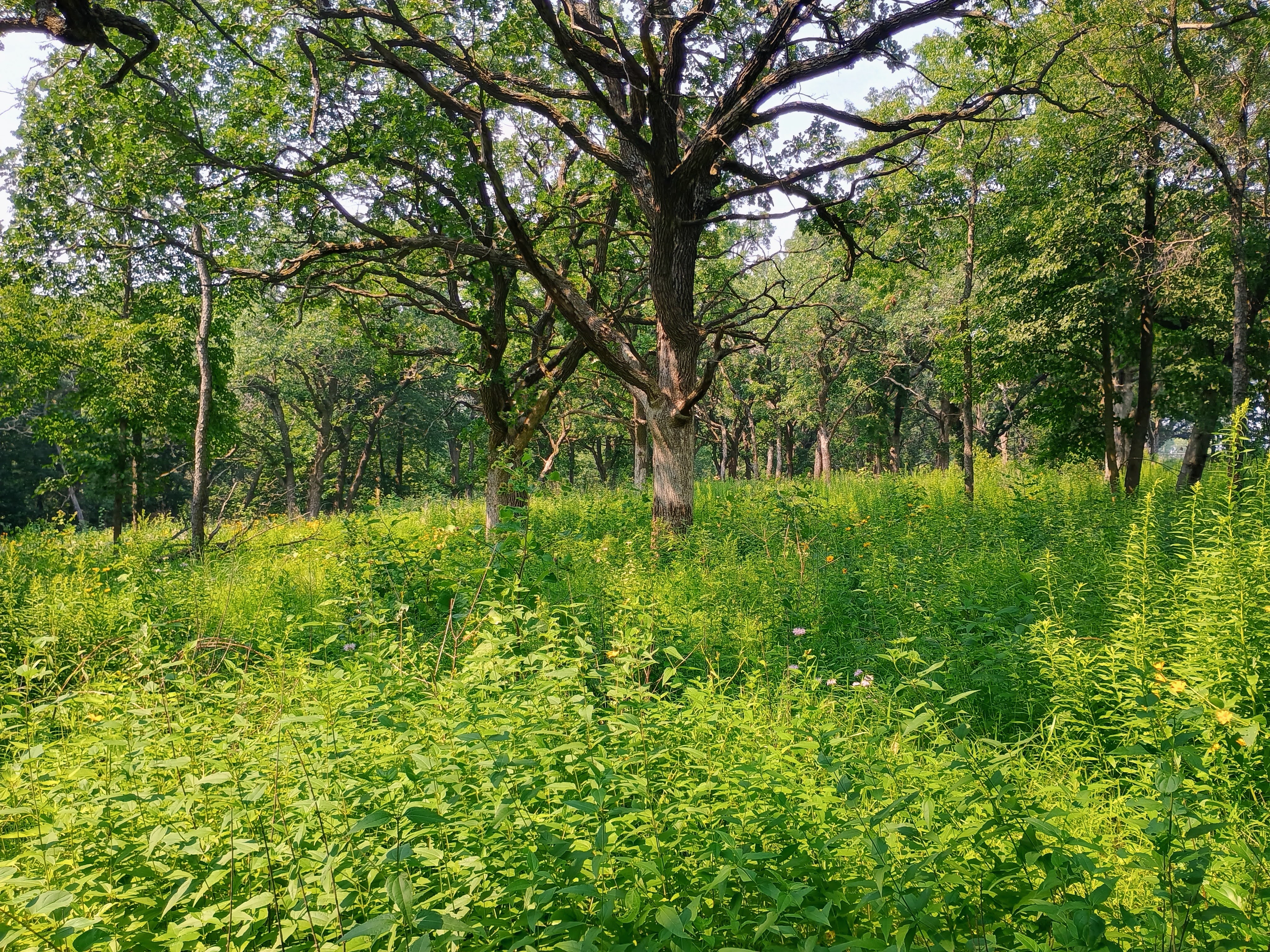
Located along a newly re-meandered stretch of the South Branch of the Vermillion River, this 24-acre woodland-turned-savanna is now a showcase for successful savanna restoration.
Where is the South Branch Vermillion River Aquatic Management Area?
This Minnesota Department of Natural Resources property is located along Highway 52 in Vermillion Township. You might drive right past this AMA and not even notice the Vermillion River itself, which runs east-west under the busy highway.
The South Branch of the Vermillion River flows north, passing Hampton Woods Wildlife Management Area, another FMR restoration site, before meeting with the main stem of the Vermillion River at 200th Street.
Just past that river crossing, off the highway on 200th Street East, is a gravel parking lot on the south side of the road with a small Aquatic Management Area sign. Past the restored prairie surrounding the parking lot is the South Branch of the Vermillion River — a small, cold-water stream that feeds the river's main stem.
The public is welcome to visit the South Branch Vermillion River Aquatic Management Area, also known as the Kasel Parcel. See the Minnesota Department of Natural Resources website for more info.) Anglers, be sure to check the Minnesota Department of Health fish consumption guidance.
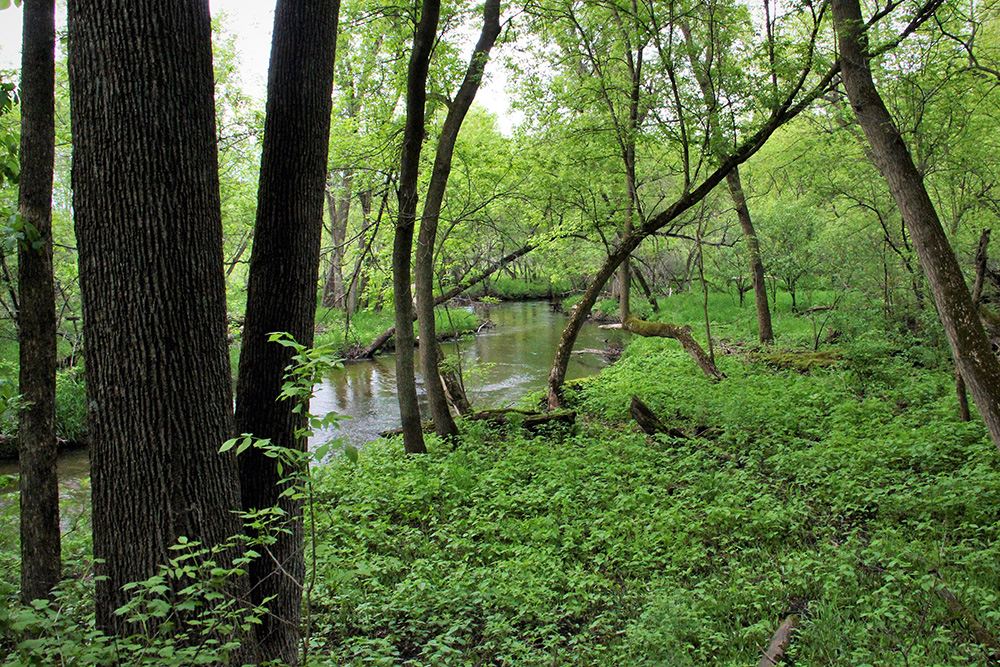
We work with volunteers to remove invasive species like garlic mustard from the riverside woodland area, making way for native plants on the forest floor to restore water quality and better support wildlife. (Photo by Rich Wahls for FMR)
What's special about the South Branch Vermillion River Aquatic Management Area?
For the last century, the South Branch of the Vermillion River flowed through a primarily agricultural landscape, though wooded buffers now flank much of the stream, and its once-channelized banks have been restored to their natural meanders.
The Minnesota Department of Natural Resources (DNR) has been acquiring land along both the South Branch and the main stem of the river for years, helping to protect one of the few trout streams located in an urban metro area. In 2019, the DNR also completed a re-meander of the South Branch as it flows through the AMA, fostering much-needed trout spawning, feeding and hiding habitat by building riffles in the stream and adding woody material along the banks.
FMR's partnership with the DNR at this and other AMAs has focused on upland habitat improvement that support and enhance in-stream conditions for cold water aquatic wildlife.
FMR's partnerships with the DNR Fisheries program started in 2015 with volunteer events to remove invasive plants from the site's woodland. In 2017, FMR secured grant funding from the Minnesota Environment and Natural Resources Trust Fund as recommended by the Legislative-Citizen Commission on Minnesota Resources, which helped us begin restoration work in earnest. Despite abundant buckthorn and other woody invasive plants, it was clear that the site was no ordinary woodland. The upland areas still contained majestic, spreading bur oaks, while the riverside areas held pockets of bloodroot, trout lily and other native woodland plants.
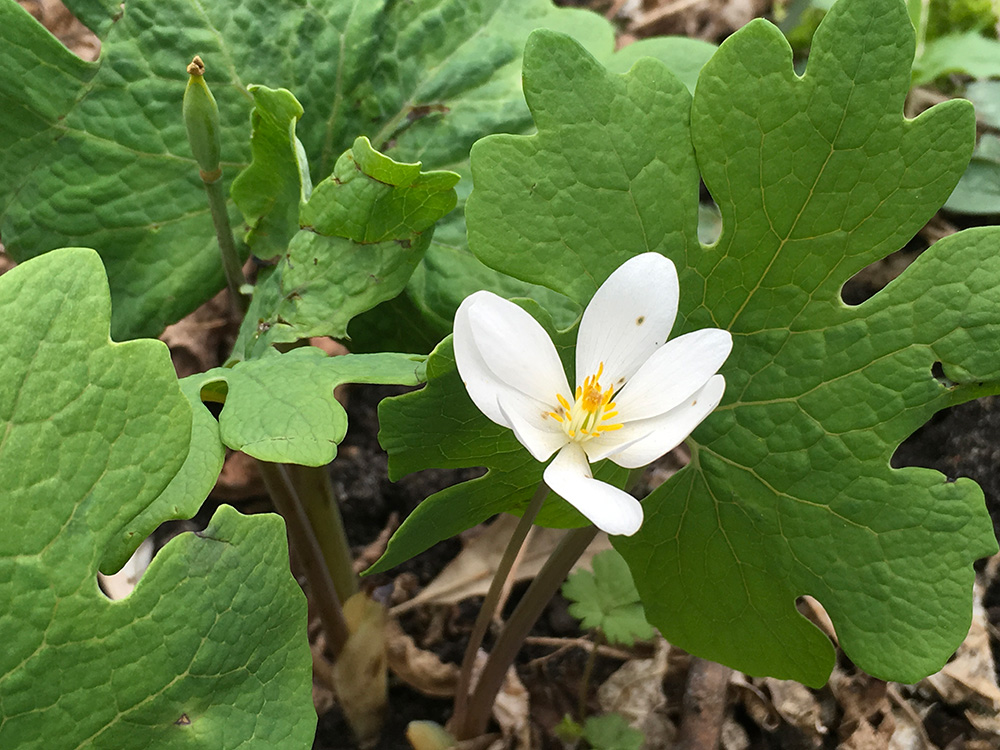
If you visit in early spring, look for native wildflowers like this bloodroot on the forest floor near the river.
Our work at the South Branch Vermillion River Aquatic Management Area
With funding in hand, FMR hired subcontractors to implement a restoration plan developed by our ecologists. Forestry mowing removed much of the woody undergrowth, and a second mow helped control re-sprouts and newly emerged seedlings. (Learn about our buckthorn removal methods that strive to preserve native plants.)
Because our goal was to restore oak savanna on much of the site, removal didn't stop with the undergrowth. We thinned some native tree species, like box elder, green ash and American elm, to open the subcanopy and canopy. We even removed some pin and bur oaks to make way for wildflowers and grasses below.
Once the buckthorn was reduced and more light could reach the forest floor, we seeded native plants. We started with grasses because they grow rapidly, shading out buckthorn seedlings while also allowing us to use prescribed fire to manage the site.
Our first burn in the spring of 2021 carried through most of the savanna acres, suppressing new woody regrowth. Without that historical disturbance regime, the site had transitioned away from a sparsely treed savanna to a closed-canopy woodland. After the burn, we seeded wildflowers into the burned areas to add diversity and pollinator resources.
What was once a dark, buckthorn-dominated woodland is now an open savanna habitat full of birds, bees and other wildlife. And according to Mark Nemeth, MN DNR Trout Stream Habitat Specialist, the upland restoration is also extremely important for trout populations. Increasing upland plant diversity increases insect diversity and overall insect populations, adding to the available food sources for trout throughout the year.
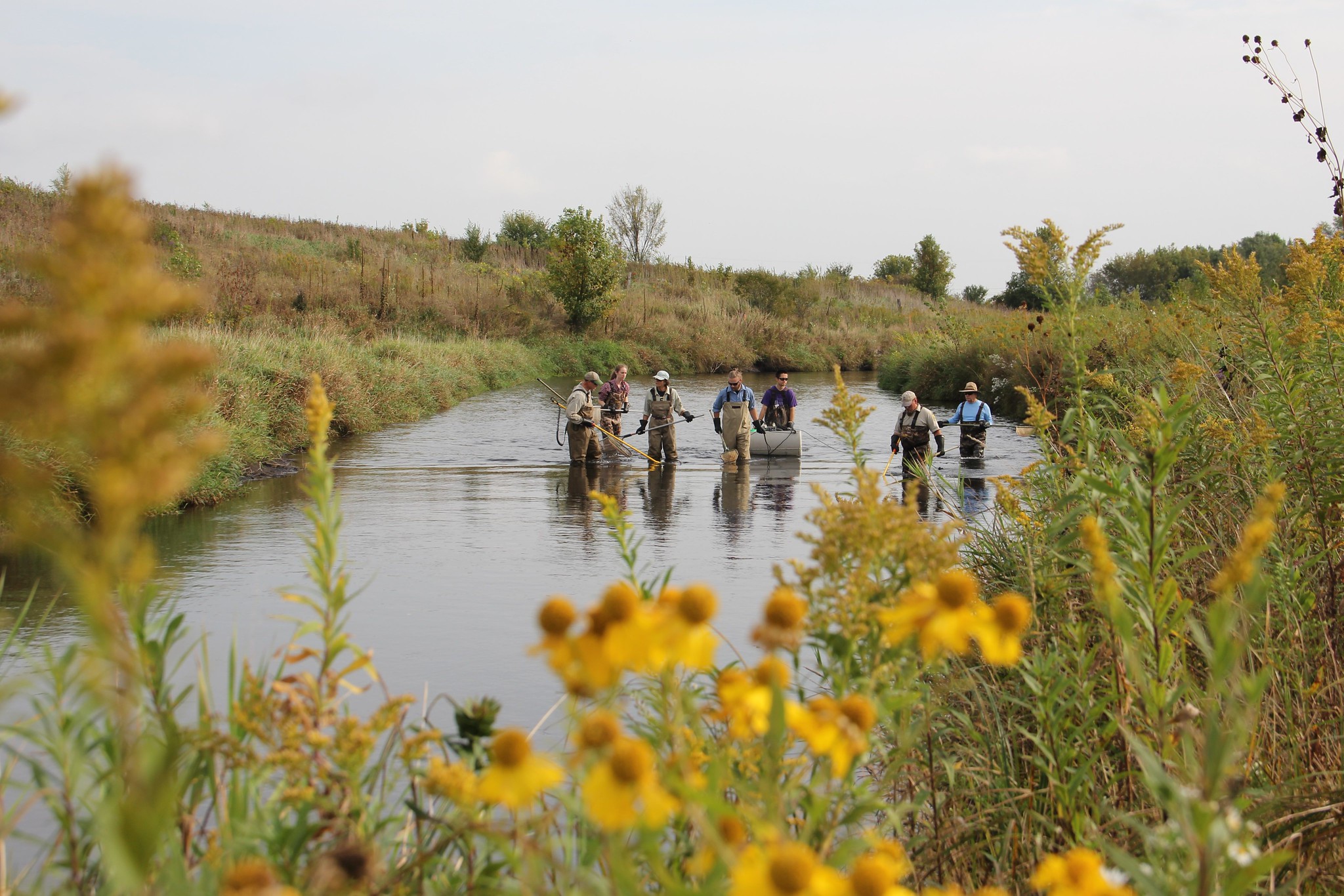
Trout surveys are showing increased populations, thanks to restoration projects along the Vermillion River. (Photo by Rich Wahls for FMR)
FMR has engaged volunteers at this site each year, helping pull newly emerged garlic mustard and other invasive plants, seed native wildflowers, and conduct other tending tasks. In recent years, FMR has also partnered with the Hmong American Farmers Association, which owns the land to the east of the AMA up to Highway 52. In 2021, FMR co-hosted a volunteer event where volunteers helped remove fruiting buckthorn from their property, jumpstarting restoration on the wooded acres of the farm while also protecting the restoration investment made at the AMA.
Check out this video about our collaboration.
Find out more and get involved
- Volunteer with us to restore places like this across the metro or join the Vermillion Stewards. If you'd like to get notifications about volunteer events, sign up for our twice-monthly e-newsletter, Mississippi Messages.
- Learn more about trout streams.
- Contact FMR project lead Laura Domyancich-Lee.
Partners and funders for our work at the South Branch Vermillion River Aquatic Management Area
This work is made possible by the Environment and Natural Resources Trust Fund, the Laura Jane Musser Foundation, the Minnesota Department of Natural Resources and its fisheries program, RBC Wealth Management, Xcel Energy and by our generous donors like you!
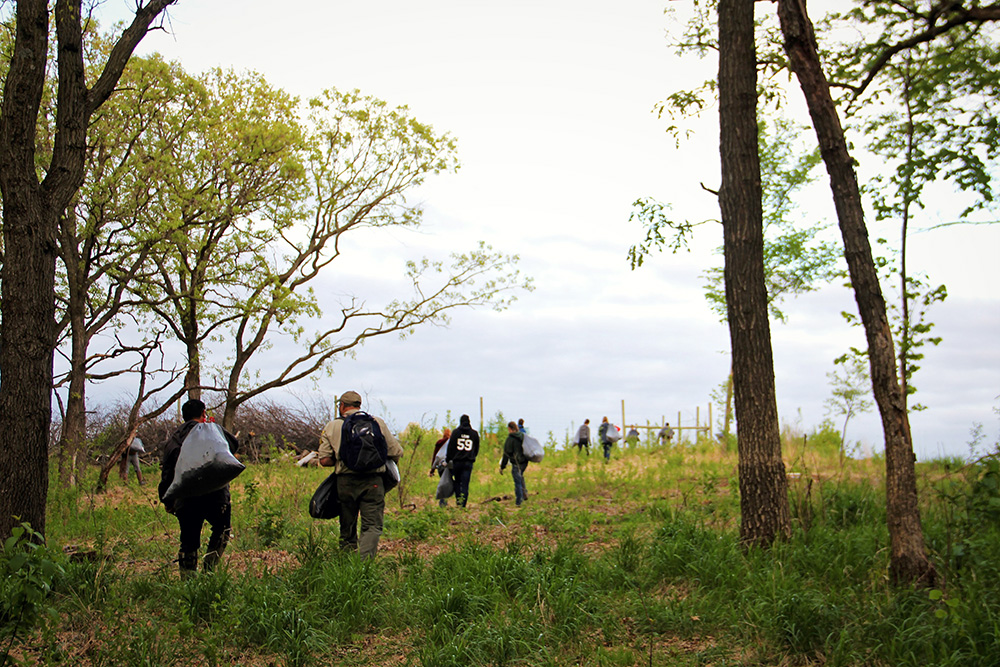
Thanks to the volunteers who have helped restore this site! (Photo by Rich Wahls for FMR)
Where we work
FMR maintains over three dozen habitat restoration and land protection sites in the metro area.