
Prescribed burns: How fire can help restore habitat
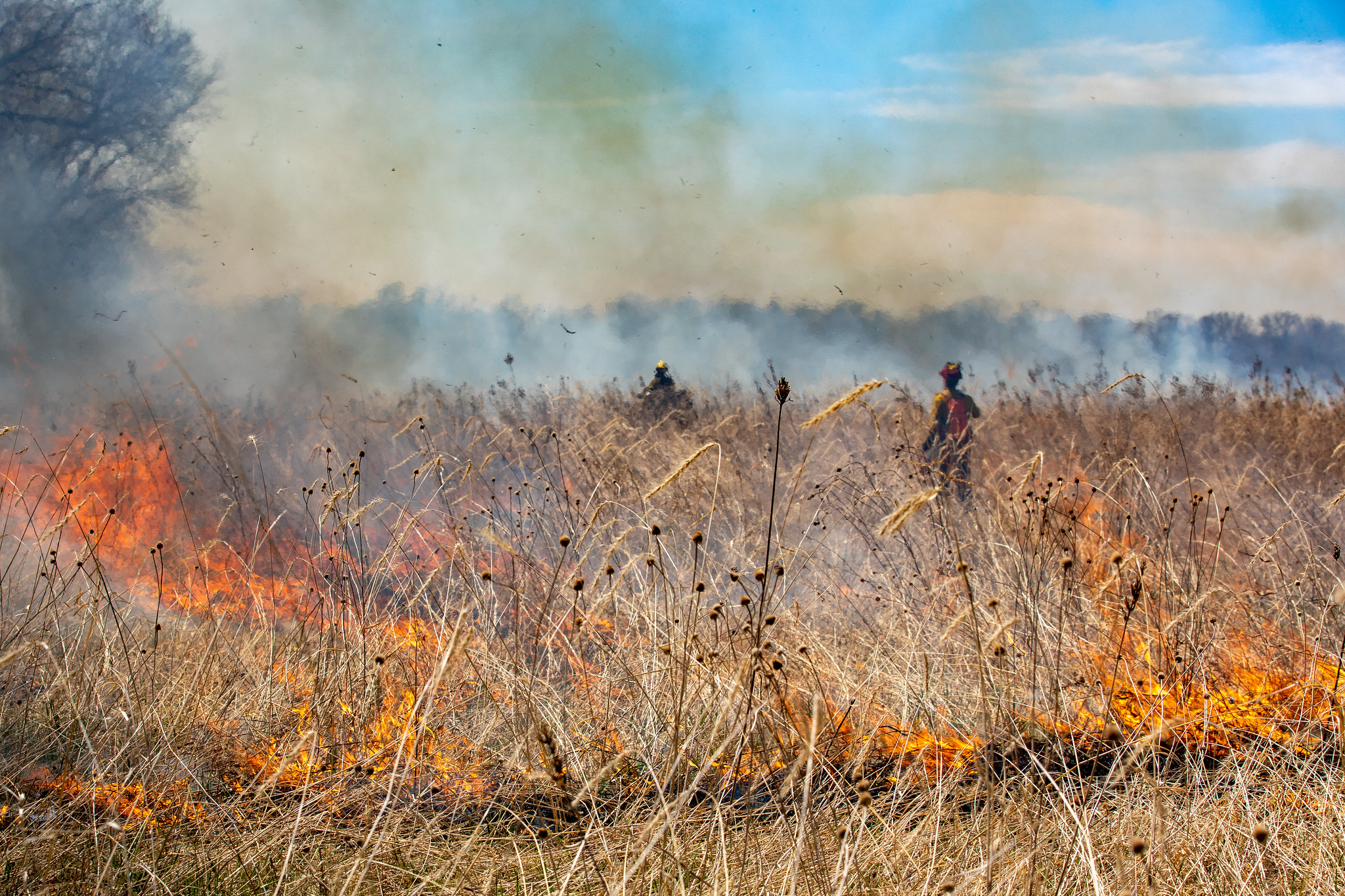
Prairies evolved with fire, so prescribed burns can help them flourish. (Photo by Tom Reiter and Will Stock)
Fire can be destructive. Walking through a natural area with burned plants and blackened ground might seem like cause for concern, calling to mind dangerous wildfires.
But planned, controlled burns can reinvigorate some of Minnesota's ecosystems, helping to support more resilient, thriving habitat.
How and why we use prescribed burns
Here in the metro area, FMR uses controlled fires, or prescribed burns, at many of our prairie, savanna and woodland restoration sites. Before European colonization and the establishment of government fire suppression policies, Indigenous people used fire to manage the land for wildlife and plants. Lightning strikes also frequently sparked fires that burned larger portions of the landscape. Since many generations of native plants and ecosystems here evolved with fire, they depend on periodic burns. Indigenous people and land managers have worked to safely re-employ fire in land management, and returning this type of disturbance to the landscape is one of our main goals when restoring prairie and fire-dependent woodland habitat.
We burn land to rejuvenate plants and encourage new, vigorous growth, and for the suppression of certain species that may encroach into these systems in fire's absence. Fire can also help us prepare a site for more native planting. It removes the annual buildup of dead plant material, providing bare soil and nutrient-rich ash where seeds can germinate. Fire-adapted prairie plants like big bluestem, blazing star and butterfly weed also produce more and higher-quality seed in the season following fire, all in an effort to take advantage of those better germination conditions.
Many woody plants, including invasive species like buckthorn, have thinner bark and can't take the heat. So a prescribed burn can slow down the spread of woody invasive plants and reopen habitats for grasses, wildflowers and other native trees.
Because of all these benefits, we try to burn prairie sites every two to four years, with woodlands often on a 10-year or more rotation. Fire can be one of the most efficient and cost-effective ways to manage and maintain habitat, especially in the long term.
Video: A burn from above
See our process in this 2.5-minute video from a prescribed burn at our restoration site at William H. Houlton Conservation Area in Elk River.
Safety first
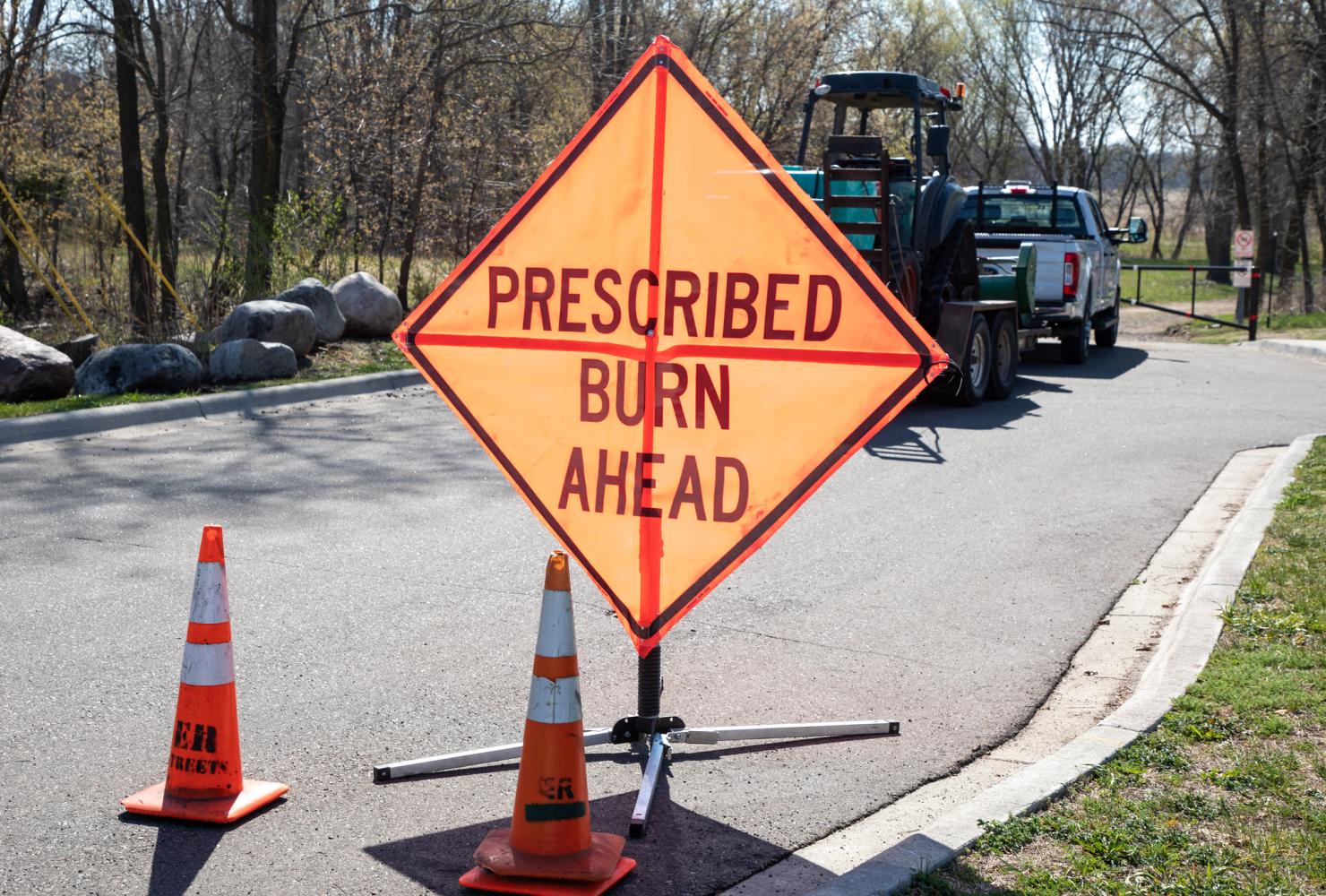
We meticulously plan our prescribed burns, carefully considering with our contractors the humidity, wind speed and direction, precipitation and other weather conditions. Because many of these fires occur in populated areas, conditions have to be just right to proceed so we can keep a burn under control and ensure that smoke doesn’t bother nearby houses or businesses.
Good communication is critical. We work closely with all agencies involved to let park users and neighbors know when a burn is planned.
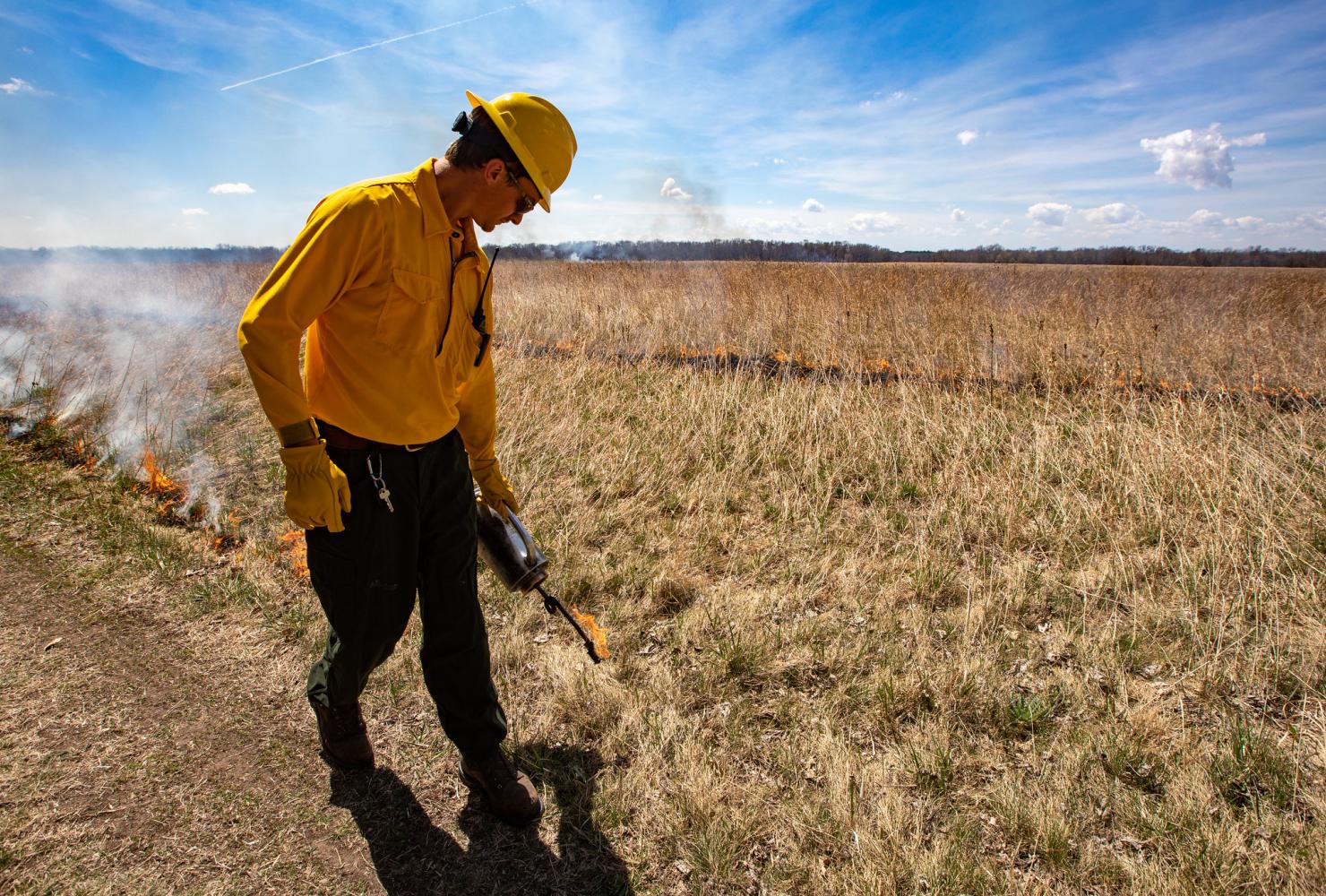
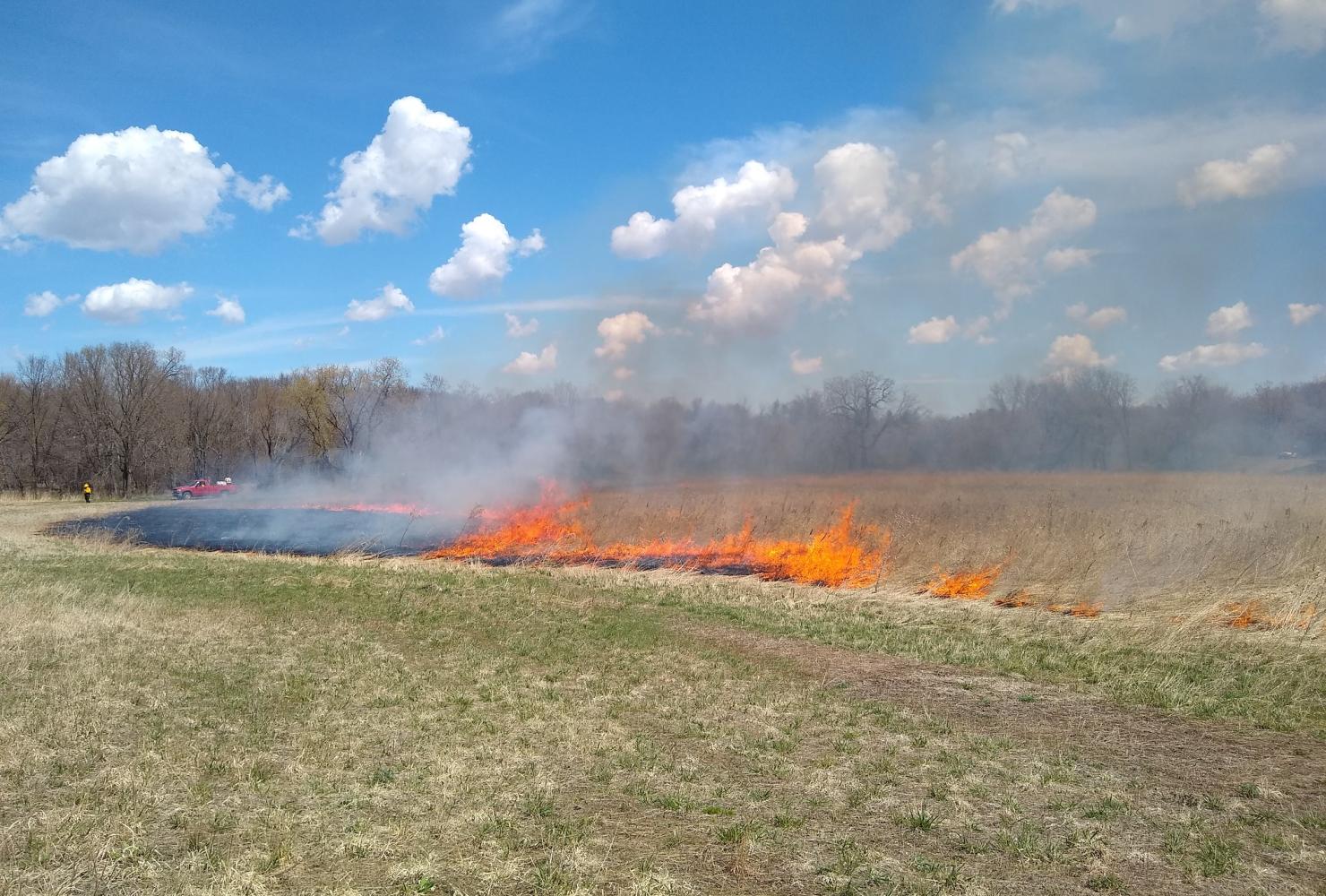
Slideshow: On the day of a prescribed burn
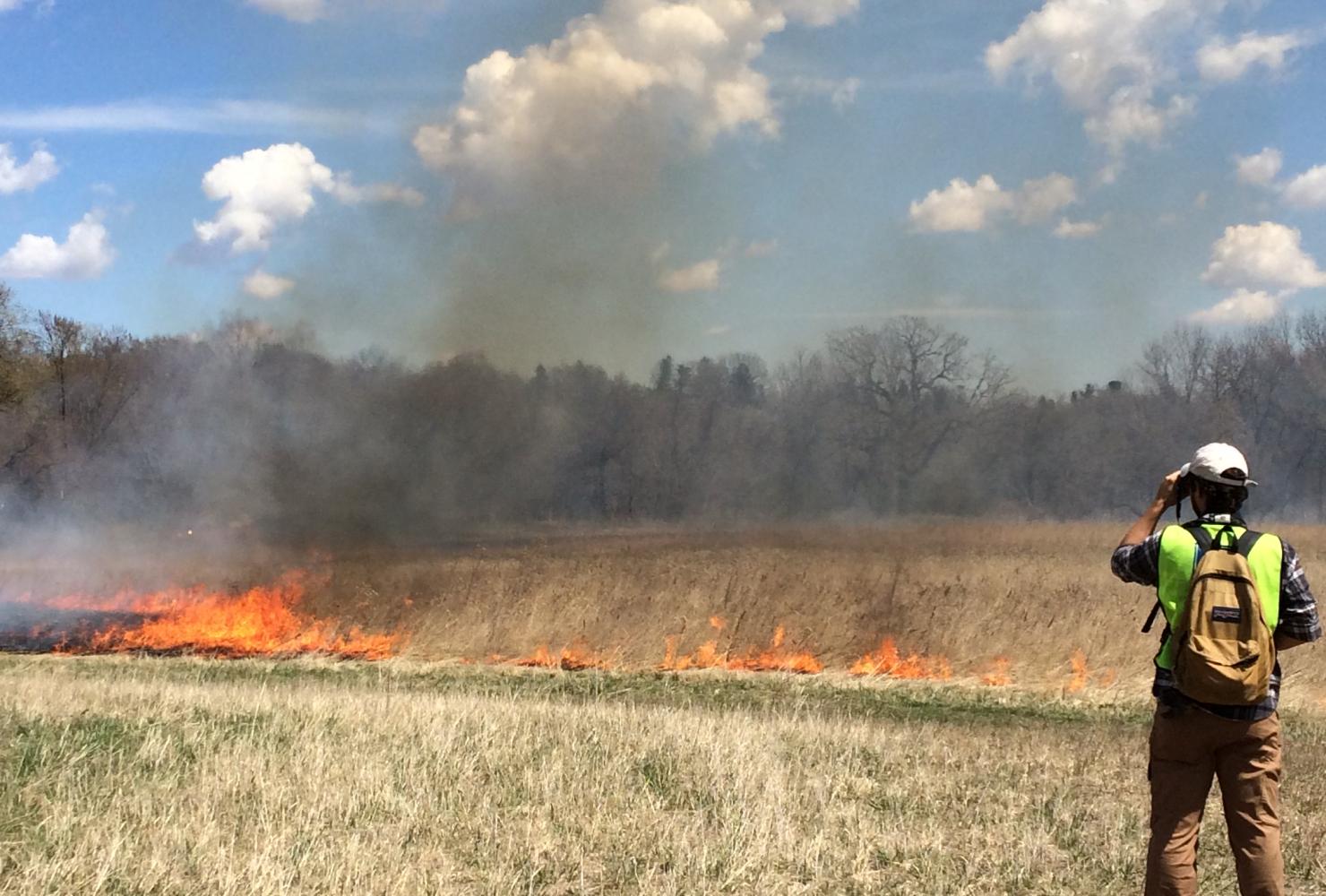
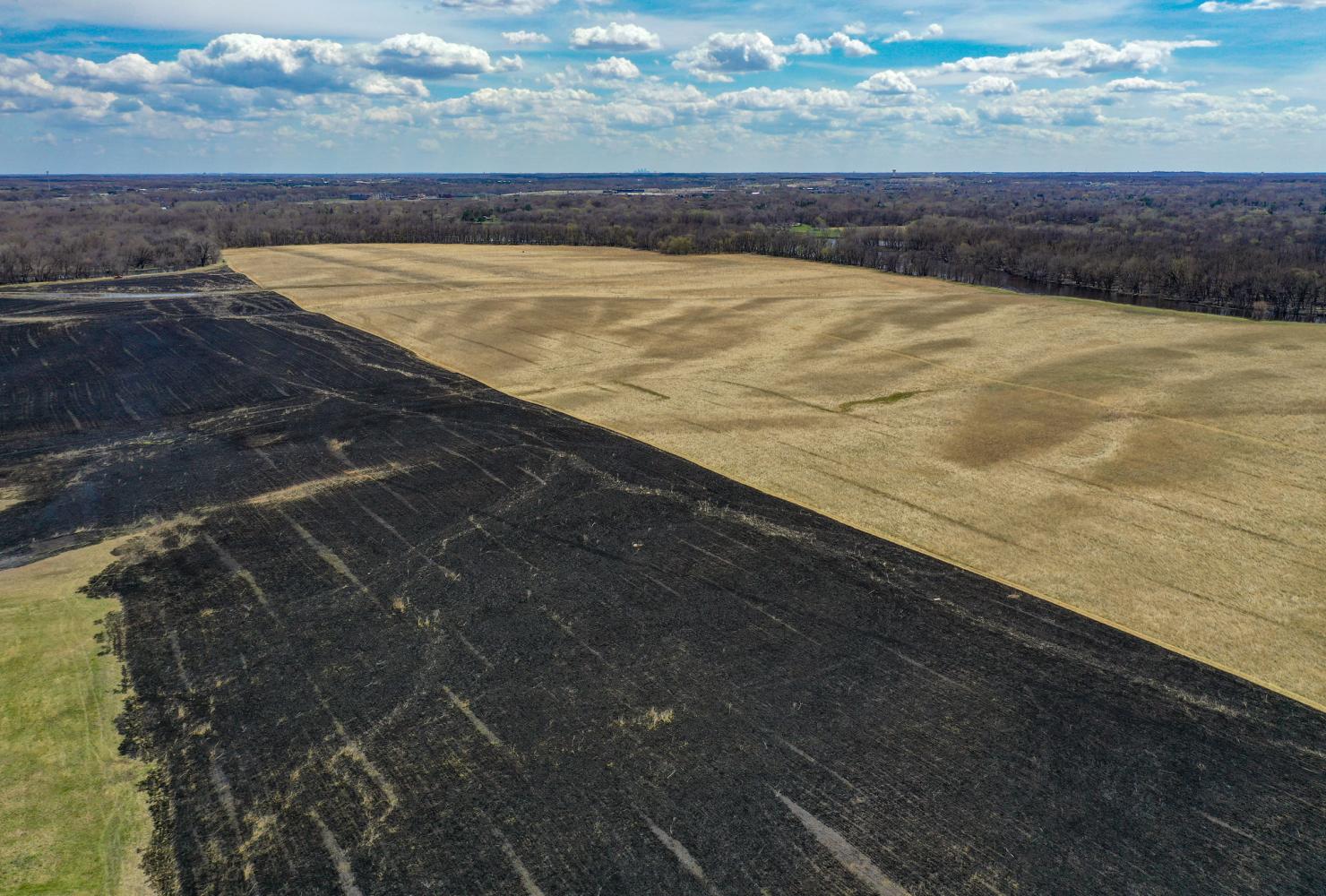
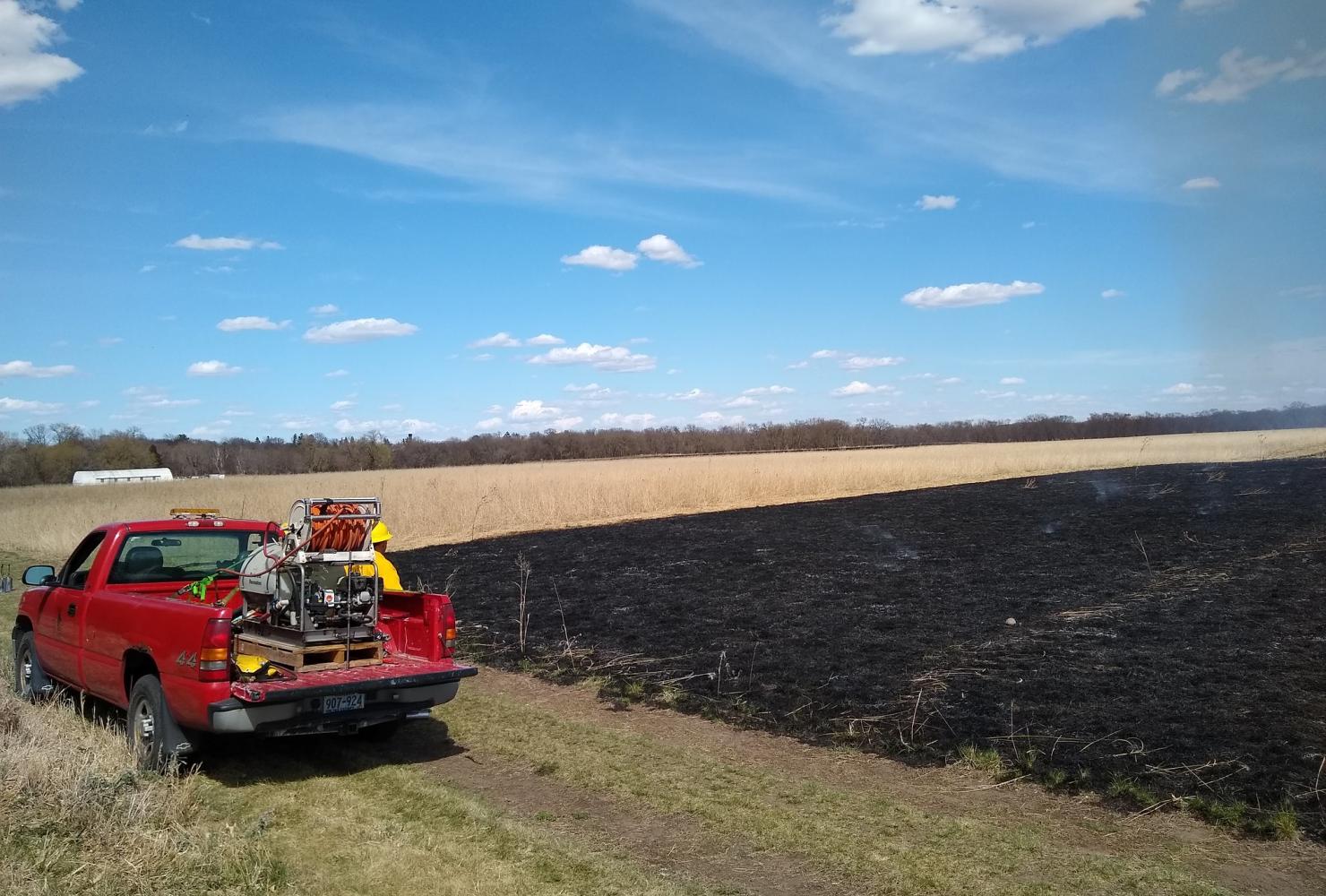
Check out this slideshow to see key moments on a prescribed burn day, including some of the precautions and steps we take with our contractors.
Timing is everything
The seasonal timing of our burns is always shifting, and continues to change due to restrictions on burning in high-potential zones for the endangered rusty-patched bumble bee. Burns occur before flowers bloom in prairie areas, and after these bees have nested in soil burrows in woodlands.
Because of these factors, the window of time during which an area can be burned safely is quite narrow, leading to two recognized burning seasons: spring and fall, each with its own advantages.
Benefits of spring burns
A spring prescribed burn reduces cool-season weeds and invasive grasses like smooth brome and Kentucky bluegrass. This gives warm-season grasses and wildflowers a leg up in accessing water, nutrients and pollinators, supporting their growth and abundance. Spring fires are also good for targeted specific invasive plants, including species like Canada thistle. These burns can also consume small woody plants that have encroached into restored areas. In all cases, creating space and providing nutrients for newly germinating or growing plants helps native species get a jumpstart on the growing season.
Benefits of fall burns
A fall prescribed burn is a useful tool for reducing unwanted woody plants. These species spend the growing season investing energy in the growth and development of buds that will become next spring's leaves and flowers. Burning trees and shrubs in the fall with a hot fire removes this growth. Often, these out-of-place trees and shrubs don't come back the following spring, allowing grasses and wildflowers to fill the gaps left behind.
Because of our brief springs and hot summers, warm-season grasses, such as big bluestem, can become very abundant quickly, and native cool-season grasses and sedges have a harder time getting a foothold. Fall burning, which consumes the aboveground parts of warm-season grasses, creates openings for other grasses and sedges that actively grow in early spring.
Fall burns also benefit prairie wildlife. Late-season fires temporarily increase bare ground, which is important to ground-nesting birds for maneuvering and accessing food. Fall burns also favor wildflower growth the following spring, and the temporary flush of wildflowers early the next growing season provides immediate food sources for foraging bees and other invertebrates. Additionally, insects, reptiles and nesting birds are less likely to be harmed during fall burns.
When possible, we commonly rotate seasons for burns in order to benefit the greatest number of species and get the best of both worlds from spring and fall burns. But no matter when we burn, we always strive to burn only a portion of a given site at a time, leaving refugia and resources for wildlife.
After a prescribed burn
After a burn, life returns almost immediately to the landscape.
We check our sites in the following days and weeks, and often see sprouts of green within a week. The black soil left behind after a fire warms up quickly, stimulating new plant growth. Many species are able to take advantage of the open conditions to germinate and grow, including more conservative species that may have been waiting in the seedbank for just this moment.
At many FMR sites, we’ve seen species seeded five or more years prior emerge only after a burn. These newly germinating species add diversity to our sites, providing even more food and nesting resources for pollinators and other wildlife.
Video: Results in bloom
In this video taken just months after a spring burn, our restoration site at Ole Olson Park in Minneapolis bloomed beautifully.
Help us blaze the way for habitat
FMR’s work to restore critical habitat is made possible by our volunteers and members. Thank you!