
Good additions, missed opportunities: Our take on MN's new climate change plan
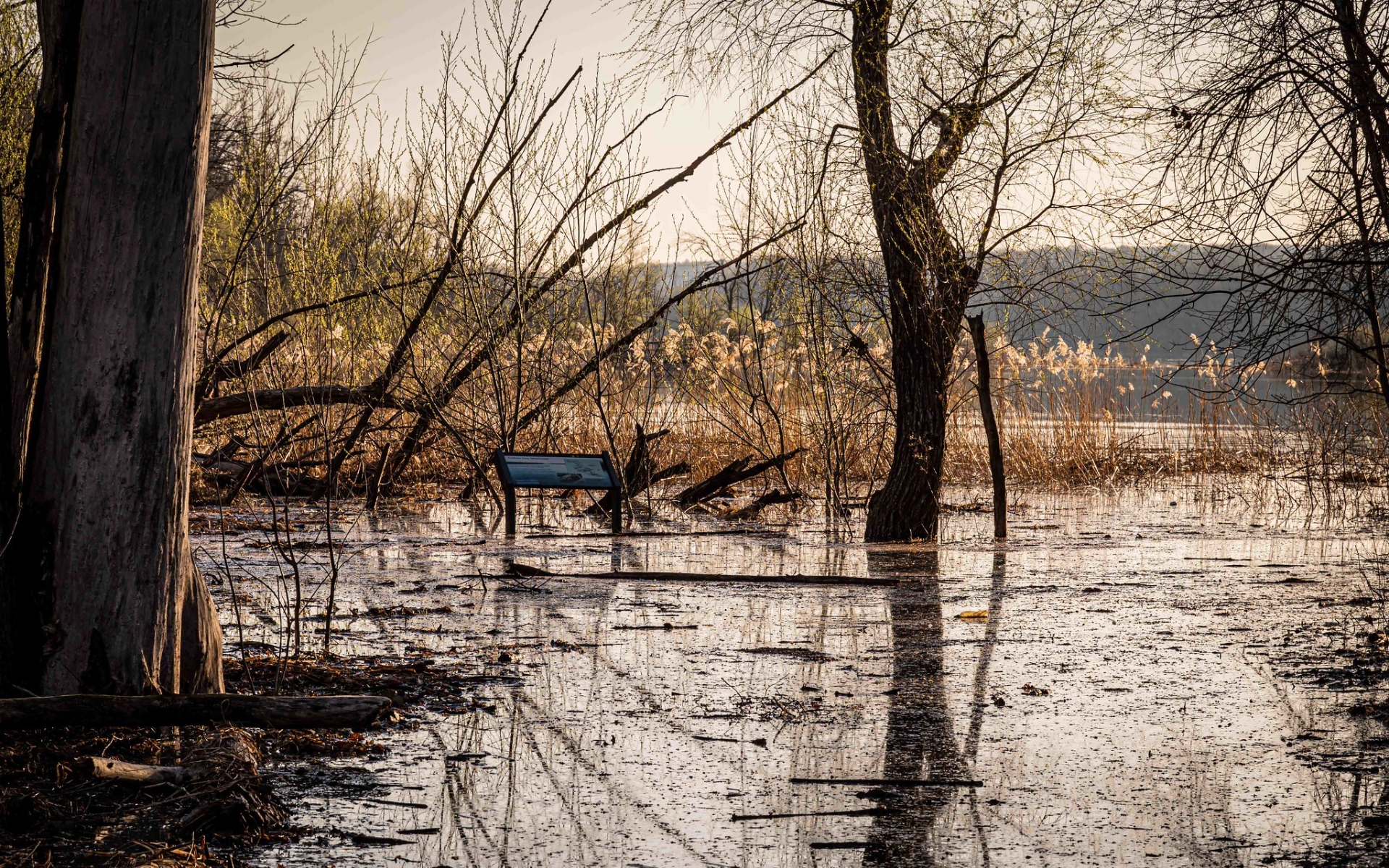
Climate change is expected to lead to more flooding, like what you see above at Crosby Farm Regional Park (an FMR restoration site) in 2023. (Photo by David Wheaton for FMR)
The state released its updated Climate Action Framework in February, following a year of engagement with organizations like FMR (and our River Guardians advocates), the private sector and others.
The stated goal of this framework is to identify “strategies to help Minnesotans avoid the worst impacts of climate change,” and this final version is akin to a policy roadmap. It includes dozens of recommended actions, though none of it is binding. As is the case with the also-recently-released Nutrient Reduction Strategy, the framework’s efficacy hinges on how our state agencies and the Legislature allocate time, energy and funding in the future.
The framework is delineated along seven categories, all of them critical. We focused our efforts on two in particular — Clean Transportation and Climate-smart Natural and Working Lands — due to their outsized ramifications for the Mississippi River.
A lot of what we pushed for is present in this new Climate Action Framework, particularly around continuous living cover (CLC) agriculture. That’s a victory for our work with clean-water crops from the Forever Green Initiative.
At the same time, we can’t help but be disappointed by the ways it falls short.
Clean-water crops and living cover make it in
Let’s start with the good.
Last year, while the state’s Climate Change Subcabinet was soliciting feedback on an updated framework, we urged the state to lean into the potential of market-based CLC farming to reduce emissions, bolster landscapes’ resiliency and protect water resources. We also underscored the need to explore ways to bring down vehicular emissions.
All of this made it in.

Shout-out to River Guardians!
You sent in more than 130 messages urging decision-makers to include more river-friendly farming and transportation in the new climate plan. Your efforts helped make this happen. Want to help take action in the future? Sign up to be a River Guardian.
Within the "Action Steps" section, the framework recommends:
- An emphasis on continuous living cover to keep the soil covered year-round in vulnerable drinking water areas (2.4.1.2).
- More investments in markets and supply chains that support continuous living cover crops. It specifically spotlights the grants program FMR, Forever Green and other partners helped establish for that purpose (2.5.1.1).
- More support and an expansion of research into crops that provide significant environmental benefits, like reducing nitrogen loss, increasing carbon sequestration and requiring less water (2.5.1.2).
- Advancing sustainable aviation fuel with feedstocks that are both low-carbon and provide additional environmental benefits (2.5.1.5). And encouraging this through the use of existing policies (e.g. tax credits or blending standards) plus the creation of new programs, while taking full life cycle emissions into account (6.2.2.1).
- Increasing incentives for farming practices that restore soil health and sequester carbon, such as perennial crops, cover crops and diverse crop rotations (2.3.1.1).
The inclusion of these specific policies is a real accomplishment.
But the framework's authors could have done more.
A lack of emphasis and a can kicked down the road
The Climate Action Framework is sprawling. (It is split into seven separate PDFs, if that gives you any idea.)
Rather than being included in the main section, where they would have been front and center, the recommendations listed above were kept in as lower-level action steps. They’re there, but not with the level of emphasis we hoped for — nor the level they deserve.
The Climate-smart Natural and Working Lands section largely fails to identify measurable outcomes for Minnesota’s farm sector, instead deferring this task to a future “stakeholder dialogue” process that has not yet begun. This represents a significant missed opportunity and is inconsistent with other sections of the framework, which commit to identifying these metrics.
Building on the framework
Despite our disappointment over those missed opportunities, we still see the updated Climate Action Framework as an important step forward. In a moment when the federal administration is openly hostile to climate action, it is vital that Minnesota and other states continue to build momentum.
With a new governor taking the helm in 2026, not to mention the uncertain balance of power in the House and Senate, it may be useful to view the framework as a call to action and an accounting of potential levers for climate progress in the years ahead.
With your help, we’ll continue to push the state’s leaders and decision-makers for meaningful measures that safeguard the Mississippi River watershed and beyond from the worst impacts of our changing climate.
Become a River Guardian
Sign up and we'll email you when important river issues arise. We make it quick and easy to contact decision-makers. River Guardians are also invited to special social hours and other events about legislative and metro river corridor issues.