
St. Paul’s newest islands are living laboratories for climate resilience
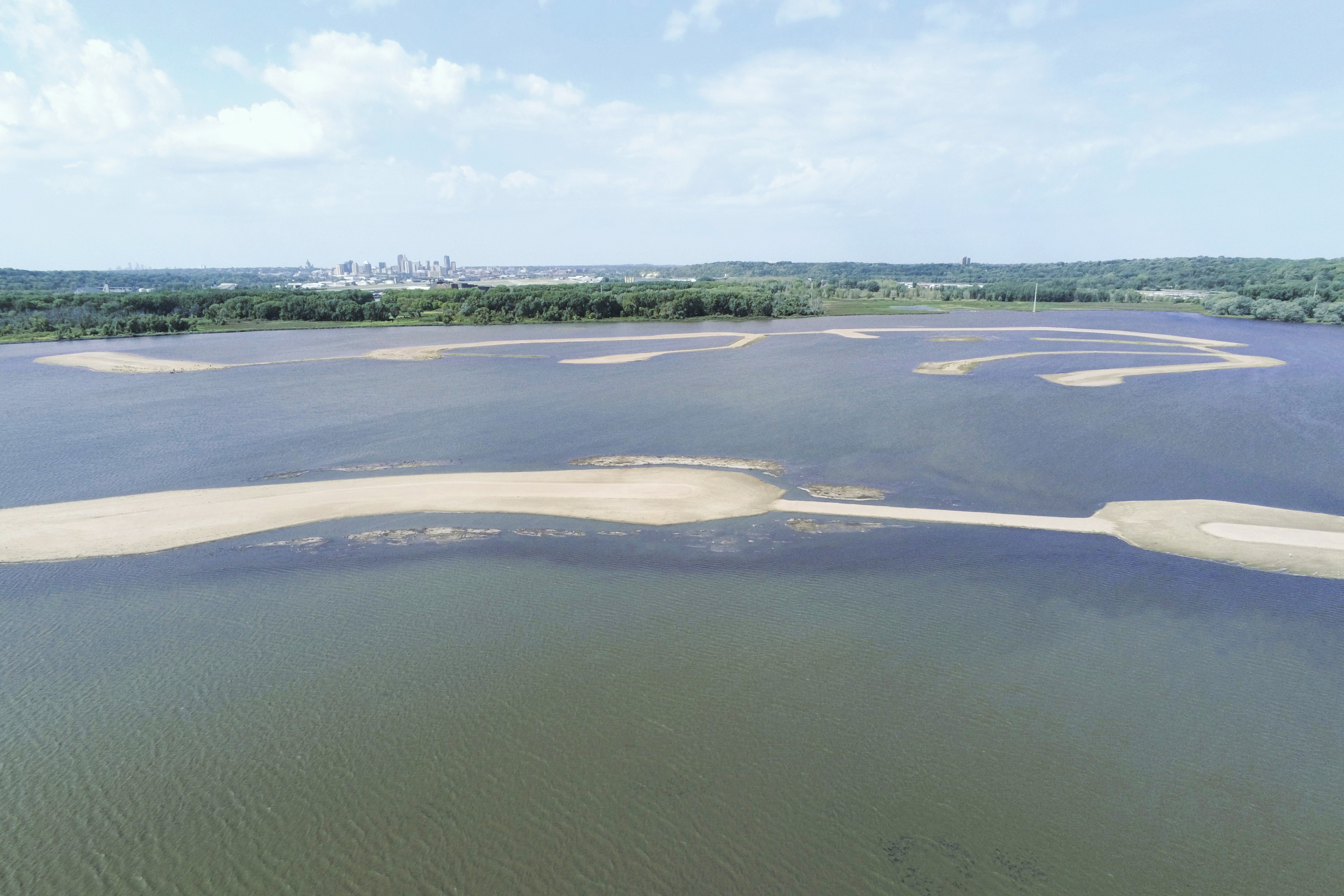
Six newly constructed islands in St. Paul’s Pig's Eye Lake are already providing habitat for birds, fish and other wildlife. FMR is ensuring that the islands' long-term vegetation establishes with climate change and diversity in mind. (Photo by USACE)
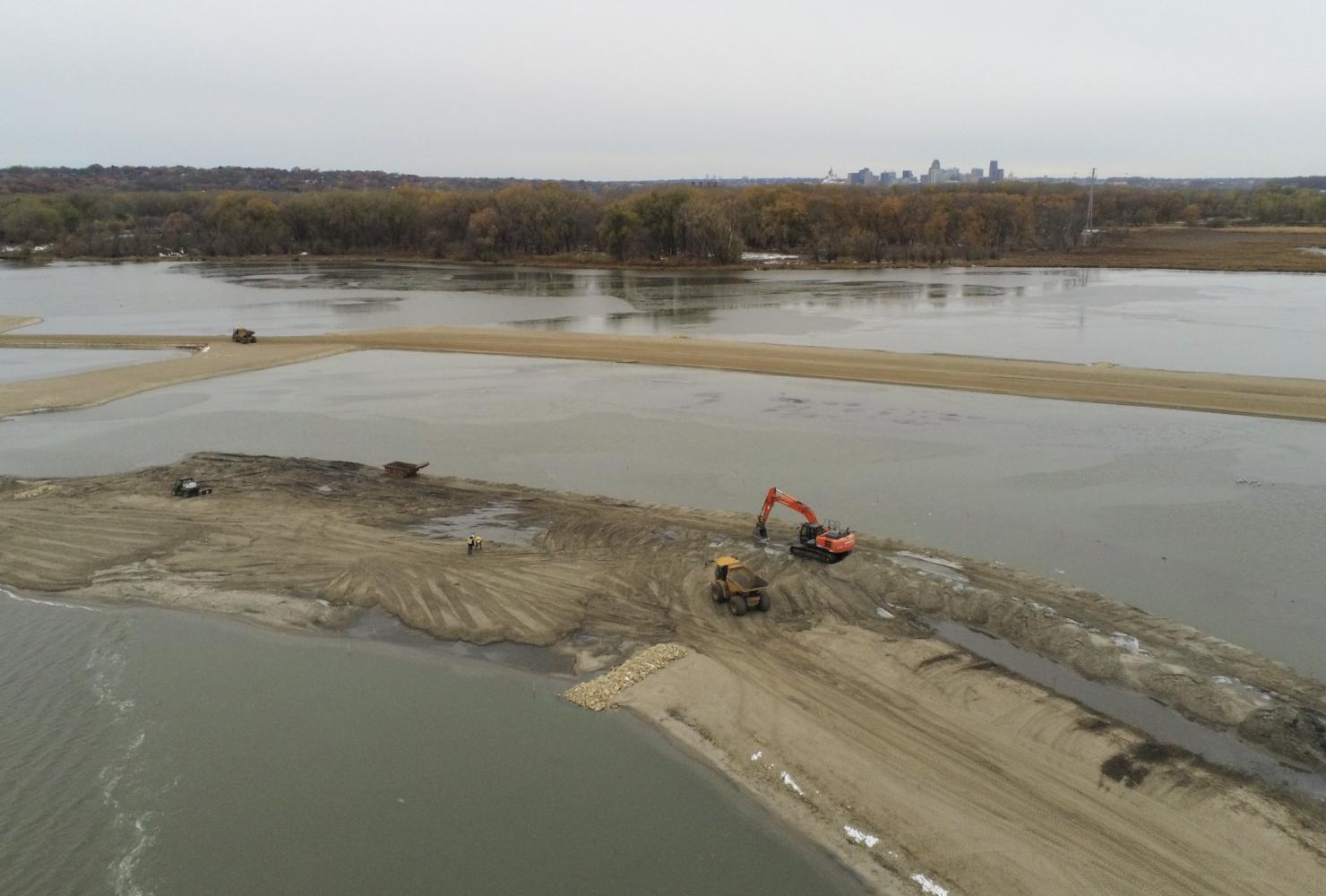
A few years back, passersby on Hwy 61 might have done a double-take at bulldozers, dump trucks and excavators seemingly floating on the water in Pigs Eye Lake, just southeast of downtown St. Paul. Those vehicles were actually helping to build new islands from the lakebed up — a U.S. Army Corps of Engineers project in partnership with Ramsey County.
The project was designed to reduce wind fetch in the shallow lake — breaking up wave action and slowing erosion of wetland habitat on the lake’s east side — and to provide important habitat for waterfowl and shore birds, spawning habitat for fish and nesting areas for turtles. These islands are also living laboratories, helping us understand more about how to create and care for climate-adapted floodplain forest.
A one-of-a-kind experiment
Back in 2018, when the Corps proposed building islands here, FMR supported the project, but encouraged the Corps to go further. With over 50 island-building projects along the Mississippi River over the last few decades, we knew the Corps can create healthy islands that benefit water and wildlife. What we didn't know was how climate change would impact long-term plant community establishment and resilience.
Fortunately, the Corps agreed, and FMR was tapped to lead the design and implementation of an experimental planting plan that established distinct tree communities on each of the six islands.
We prioritized combinations of species with varying levels of climate resilience, and drew on lessons from the Adaptive Silviculture for Climate Change experiment at Crosby Farm Regional Park in St. Paul. Variations in species and planting zones will allow us to investigate how best to establish and maintain new floodplain forest plant communities that incorporate climate resilience and retain important habitat value.
With buy-in from the Corps and Ramsey County Parks, and in partnership with Mississippi Park Connection and the University of Minnesota, the planting project kicked off in fall 2025.
Planting the future
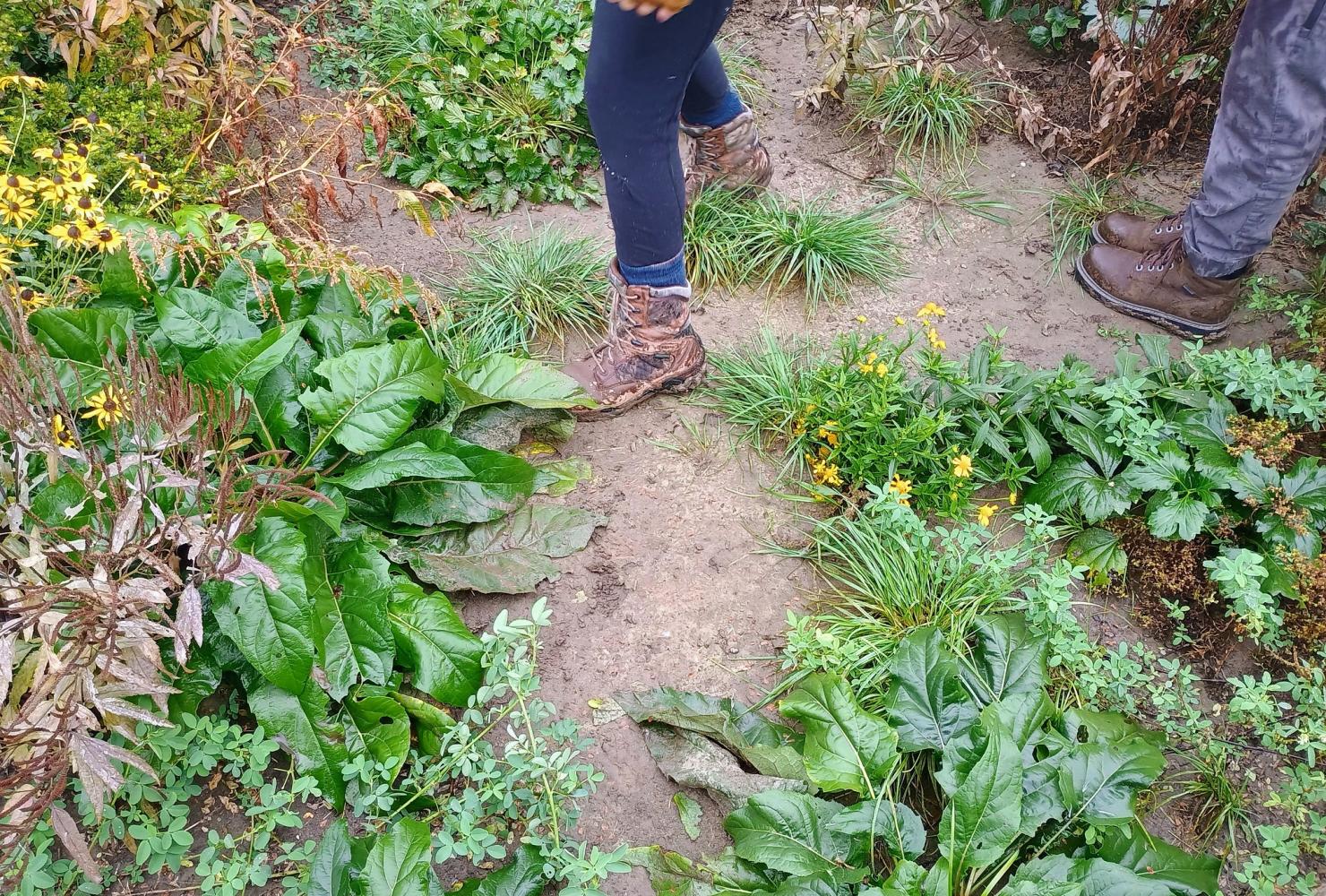
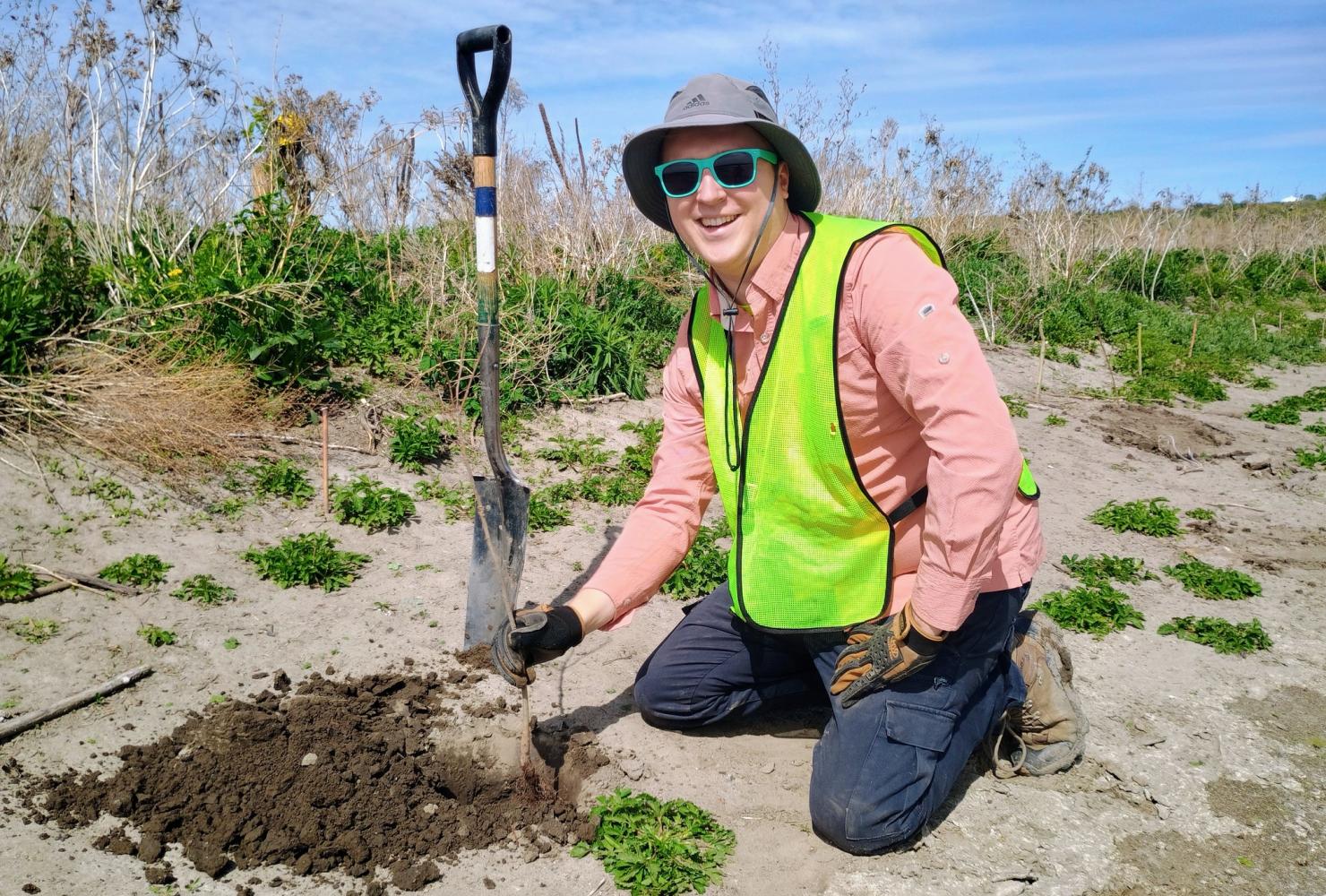
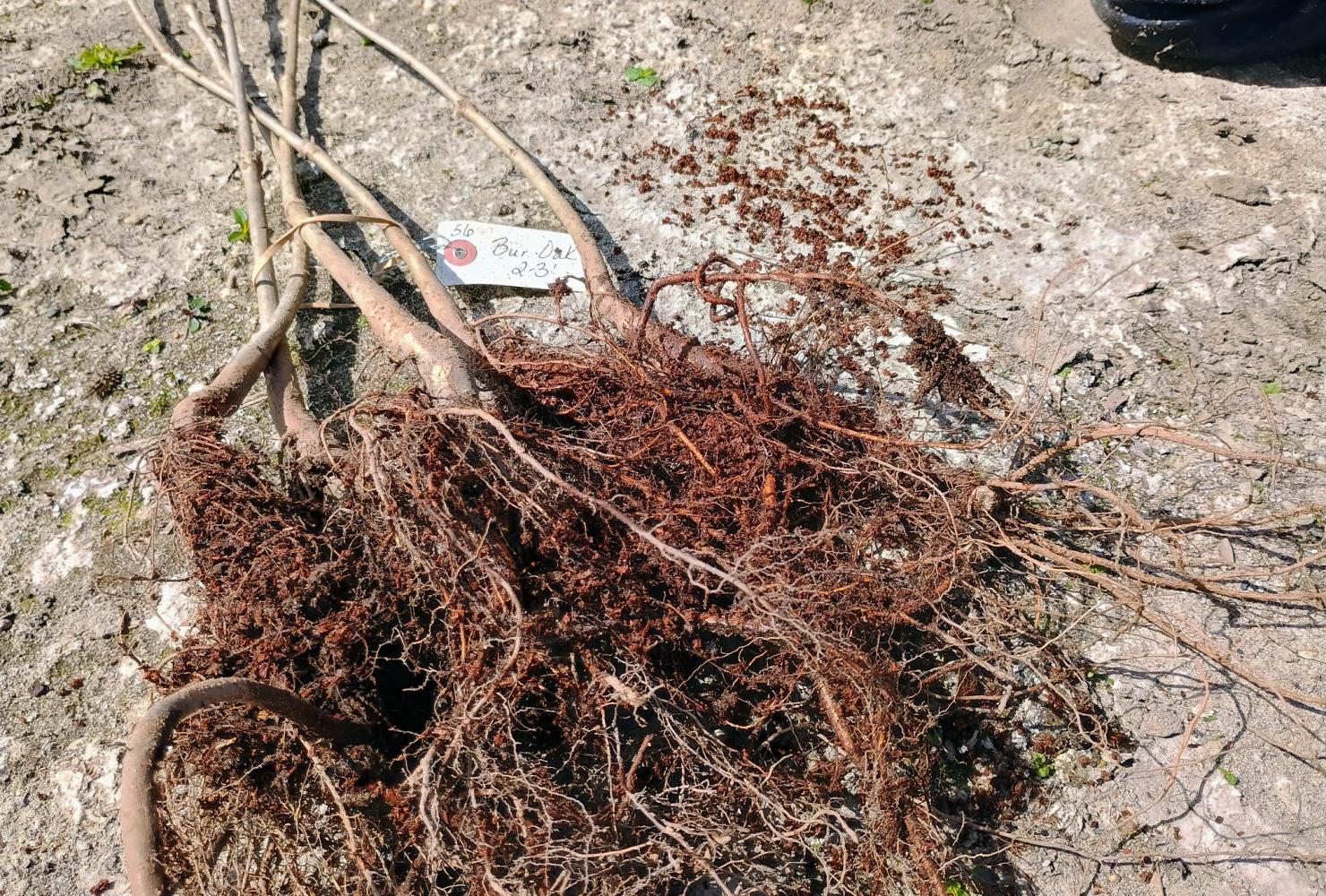
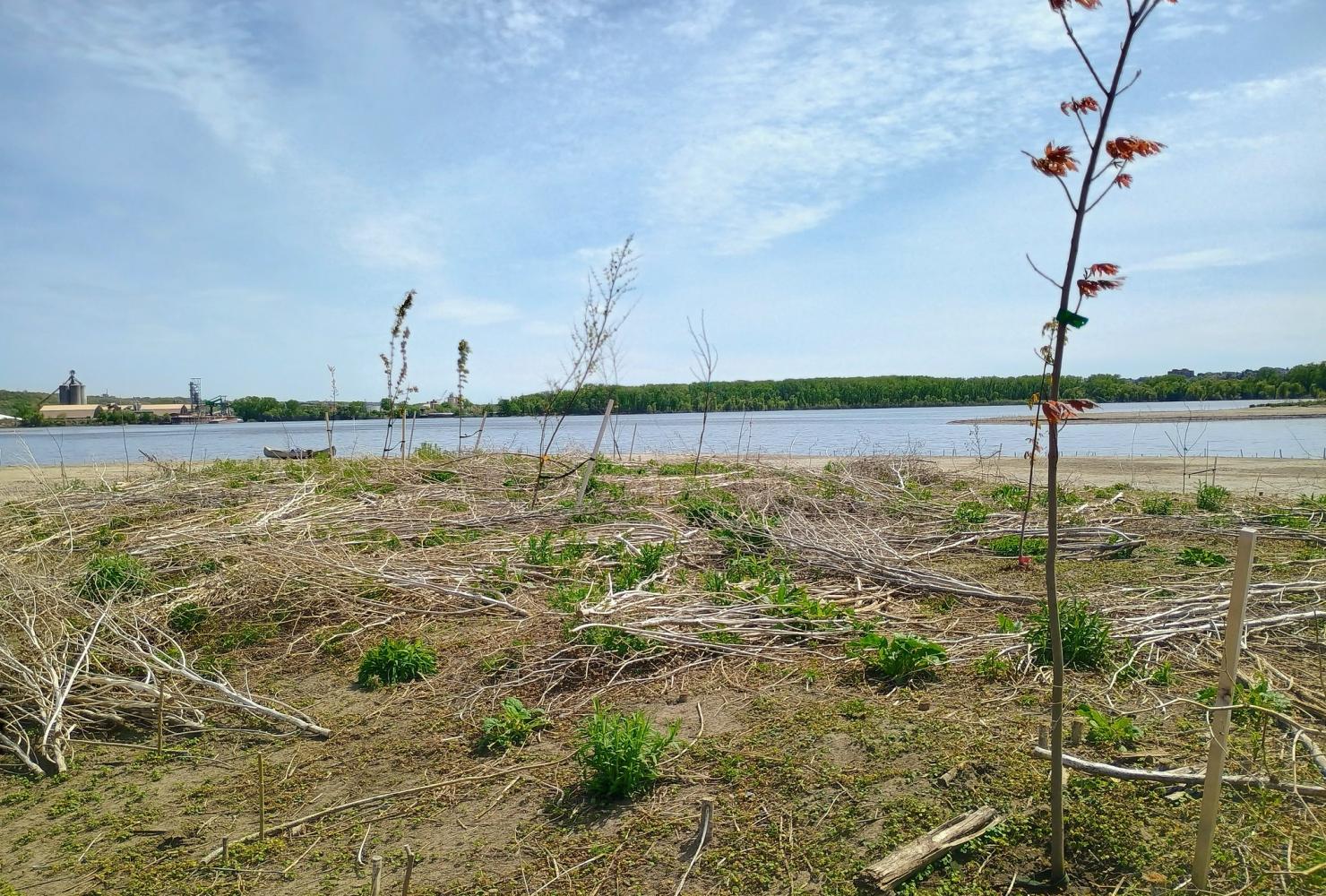
Following the fall seeding of wet-loving grasses and wildflowers, and some initial vegetation maintenance on the islands to curb the establishment of weeds from the soil seedbank, FMR and our many partner organizations planted about 1,400 trees on the islands in fall 2025 and spring 2026. We ferried bare-root trees and people back and forth by pontoon and jon boat, and canoed and kayaked staff across the lake for planting days.
Island visitors will now see typical Minnesota floodplain tree species like cottonwood and silver maple, as well as near-natives like sycamore. You’ll also see climate-adapted newcomers like tuliptree, as well as more southerly species like sweetgum.
FMR and the U of M are beginning baseline surveys to document plant establishment and tree survival.
If you build it, they will come
It'll be many years before we have usable data on the establishment of the different plant communities and their resulting habitat benefits. And we won't know the islands' impacts on the shoreline wetlands they were designed to protect for some time.
However, former FMR intern and current board member Yumi Kashihara completed her master's project in the summer of 2025 investigating the nuance of shoreline erosion in the lake and suggesting some long-term monitoring and restoration interventions.
And we're already seeing these islands provide important wildlife habitat. Fish breach the water's surface in the islands' horseshoe centers, pelicans alight and turtles shuffle into the water from the sandy banks as boats approach, and butterflies and bees criss-cross the seeded meadows. Even unexpected visitors like deer and coyotes have already been spotted on the islands.
Anglers and bird watchers are using these seemingly difficult-to-access places too. (Check out Minnesota Department of Health's fish consumption guidance before eating fish you catch.) FMR is excited to be involved in the future of this newly created special place in the heart of the metro.