Earth Day rally highlights threats to clean water
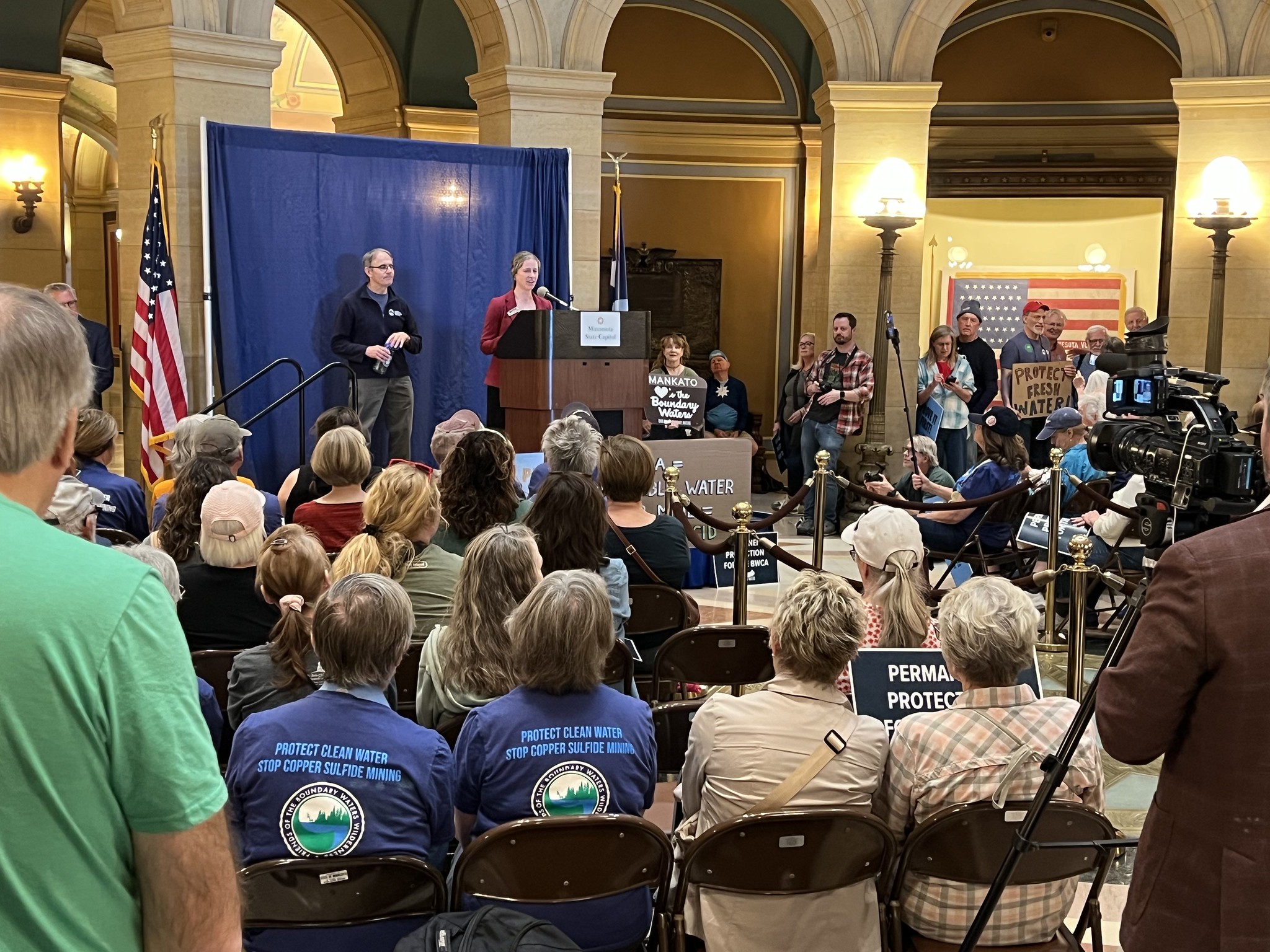
FMR's Colleen O'Connor Toberman spoke to hundreds of clean water advocates at the Minnesota State Capitol on Earth Day.
On Earth Day, hundreds of clean water advocates, including FMR staff and River Guardians, rallied together at the state Capitol. Speakers drew attention to a range of threats to clean water in Minnesota, including a proposed mine that could threaten the Mississippi River.
FMR and others speak out on water issues around the state
In her speech, FMR’s Land Use & Planning Program Director, Colleen O’Connor Toberman, urged state regulators to require Ford Motor Company to clean up its Area C dumpsite on the Mississippi River floodplain in St. Paul.
Friends of the Boundary Waters Wilderness, the rally's hosts, highlighted a recent blow to water protection.
In the week before this inspiring Earth Day rally, Congress overturned a mining ban near the Boundary Waters Canoe Area Wilderness. The ban prevented companies from seeking leases in the national forest surrounding the wilderness area — including Twin Metals, which had previously proposed a copper-nickel mine in Northeast Minnesota.
Rally speakers described how copper and nickel sulfide mines like that one may result in acid mine drainage that would damage not only surface and groundwater supplies, but also aquatic life, plant life, cultural sites and more.
The Twin Metals mine near the Boundary Waters wasn't the only proposed sulfide ore mine cited at the rally. Two more proposed sulfide mines in Minnesota put other watersheds at risk — the potential PolyMet mine near Lake Superior, and most recently, a proposed mine in the Mississippi River watershed.
The proposed Talon Metals mine
Talon Metals has proposed a copper-nickel sulfide mine in Tamarack, Minnesota, roughly 120 miles north of St. Paul in Aitkin County. A mine there would impact the Mississippi and St. Croix river watersheds. (Read more about the proposed mine.) Two national parks, the Mississippi National River and Recreation Area and the St. Croix National Scenic Riverway, are downstream of the mine and any pollution it may generate.
These waters and lands are also of great significance to Indigenous people and Tribal nations whose reservations, treaty rights, sacred places, and cultural resources like wild rice would be impacted by mine pollution.
FMR is an official partner of Water Over Nickel, the Mille Lacs Band of Ojibwe's campaign to protect clean water, land and cultural resources from the negative impacts of mining.
"In a water-rich environment like Minnesota, impacts to the health of our watersheds ripple out across the environment," says Kelly Applegate, Commissioner of Natural Resources for the Mille Lacs Band of Ojibwe. "Our pristine wetlands recharge drinking water for our communities. Interconnected wetlands carry water across the landscape and link to rivers, streams, lakes and groundwater flows."
We recently cosigned this MinnPost commentary in honor of Earth Day that offers shared principles to guide decisions about our waters as mining pressures grow. "We advocate for rigorous scientific review, respect for tribal sovereignty and public accountability in any decision that could put Minnesota’s clean water at risk," writes Applegate on behalf of the Water Over Nickel Campaign. "Clean water is Minnesota’s inheritance, not an expendable resource for short-term profit."
Speak up this summer
Minnesotans will have their first chance to weigh in on Talon Metals’ mine proposal later this summer when a public comment period opens.
Before any mining is permitted, the Minnesota Department of Natural Resources must prepare an Environmental Impact Statement about the mine. The first step in that process is to complete a scoping document or "environmental assessment worksheet" that will inform other approvals and permitting decisions.
This year’s public comment period will be for that scoping document. We’ll let FMR River Guardians know when it’s time to submit comments and how to share their concerns about the mine’s potential harmful impacts. We’ll also host educational events so you can learn more and ask questions.
Once the scoping document is finalized, the DNR prepares the Environmental Impact Statement, which is assessed for adequacy. Then Talon Metals can apply for local, state and federal permits. This process will take years and include additional opportunities for public input throughout.
FMR's role, and how you can help
Working with our Water Over Nickel partners, FMR will submit public comments and engage community advocates or River Guardians at each important step, for as long as this process may take.
Learn more about Water Over Nickel by watching the video below.
Become a River Guardian
Sign up and we'll email you when important river issues arise. We make it quick and easy to contact decision-makers. River Guardians are also invited to special social hours and other events about legislative and metro river corridor issues.