
How FMR's priorities for the Mississippi River fared — 2026
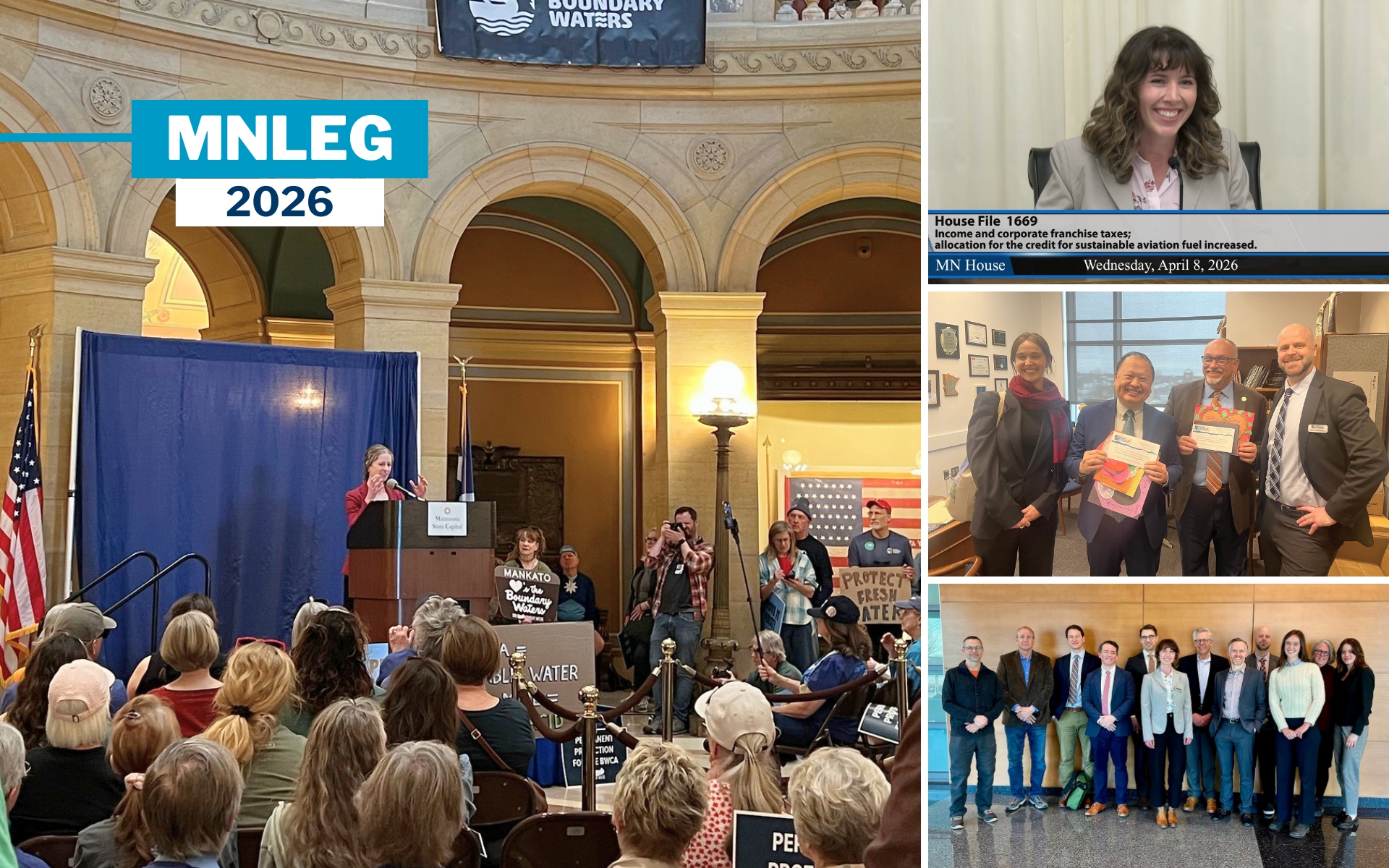
FMR staff were at the capitol advocating and testifying regularly. Thanks to a surge of timely support from River Guardians, we achieved quite a bit for the Mississippi River this session. (Photos by FMR; upper right via the Minnesota House)
Just a few weeks ago, we weren't sure how this legislative session was going to turn out. A number of our priorities had been pushed into unexpectedly precarious positions.
Would lawmakers find time to pass a tax bill that included bipartisan, widely supported environmental guardrails for new airplane fuel? Could legislators set aside their disagreements and get keystone environmental funding bills across the finish line, like they have every year for nearly two decades?
With outcomes in flux, we asked river advocates to help put some tailwinds behind these Mississippi River priorities.
And they delivered.
Legislators received more than 1,000 messages from River Guardians, urging them to support better sustainable aviation fuel, conservation funding, a lock and dam removal study and more.
When the clock ran out on the session, every single one of those once-doubtful items had been passed. It's a testament to the power of grassroots advocacy and how messages from constituents can make a real difference.
Keep scrolling to learn more about how each of these priorities came together, and how they will help us get to a cleaner, healthier river in the years ahead.
Environmental guardrails for sustainable aviation fuel

Status: Passed in the taxes bill (HF 2438 CCR)
House vote: 126-8
Senate vote: 52-15
We know the most impactful way we can reduce agricultural pollution to the river is by getting lots and lots of acres of continuous living cover crops. Sustainable aviation fuel can be a driving force (or flying force, more aptly) to make that happen — if done responsibly. We took a big step in the right direction this session.
Lawmakers passed bipartisan language to put environmental guardrails on an existing sustainable aviation fuel tax credit. These guardrails will encourage the use of winter-hardy oilseeds as a main source for fuel, and will prohibit practices that threaten habitat.
Locks and dams removal study
Status: Approved via the Environment and Natural Resources Trust Fund bill (HF 3426)
House vote: 117-15
Senate vote: 46-19
Our quest to learn as much as possible before a decision is made about the future of two major locks and dams is on track. Legislators OK’d $923,000 for FMR to conduct a removal feasibility study for the Lower St. Anthony Falls Lock and Dam and Lock and Dam 1. It’ll tell us how removal of these two massive structures might impact habitat, recreation and infrastructure on this stretch of the river, which will then inform a decision on what should happen next.
Read more about the need for this work and how it will fill the serious gaps in a federal disposition study.
Habitat restoration work at 4 FMR sites
Status: Approved via the Outdoor Heritage Fund bill (SF 2077 CCR)
House vote: 111-22
Senate vote: 47-20
Great news for riverfront habitat and FMR’s conservation work. The next stage of habitat restoration and enhancement at four FMR sites will move forward as planned. The $891,000 included in this year’s Outdoor Heritage Fund bill (read more below) will allow us to:
- Enhance 32 acres of prairie and 38 acres of forest at Hastings Sand Coulee SNA, which harbors over 150 plant species and many rare birds. 11 acres of enhancement occur on remnant native prairie.
- Enhance 7 acres of prairie and 17 acres of forest at Rosemount Wildlife Preserve, adjacent to 88-acres of newly protected Dakota County Conservation easements. This contributes to a growing corridor of protected and restored habitat in the city.
- Enhance 22 acres of riverfront forest along the Crow River (a tributary of the Mississippi) at Camp Cozy in Otsego.
- Enhance 29 acres of degraded floodplain and upland forest at Highlands of River Pointe, located along another Mississippi tributary, the Elk River.
Learn more about the special places our conservation team helps restore and protect.
Supporting design work on the invasive carp deterrent
Status: Approved via the Outdoor Heritage Fund bill (SF 2077 CCR)
House vote: 111-22
Senate vote: 47-20
The invasive carp deterrent for Lock and Dam 5 funded by legislators a couple of years ago remains on track to be installed by 2029 as originally planned. The only change brought forward this session was an extension of the interim design deadline, which is now summer of 2027. This will help ensure this important phase of the work has a sufficient amount of time to be completed without affecting the final outcome.
Funding for clean water, outdoors projects
Status: Both dedicated environmental funding bills passed
Environment and Natural Resources Trust Fund (HF 3426 CCR)
House vote: 117-15
Senate vote: 46-19
Outdoor Heritage Fund (SF 2077 CCR)
House vote: 111-22
Senate vote: 47-20
As the session neared its end, we were worried that lawmakers would, for the first time, fail to pass two dedicated environmental funding bills that included a collective $321 million for more than 150 projects that benefit clean water and the outdoors throughout Minnesota. (The Minnesota Reformer wrote about the "partisan conflict" that led to this uncertainty.)
Luckily, both passed just before the session closed — but not without challenges.
The Environment and Natural Resources Trust Fund bill (lottery proceeds for the environment) includes $102 million for projects that protect, preserve and enhance Minnesota’s air, water, land, fish and wildlife. That includes the funding for FMR's locks and dams study, detailed earlier.
In addition, this bill includes $28.18 million for the state’s new community grants program that was included as a part of the voter-approved 2024 reauthorization amendment. The program, which will be administered by the Department of Natural Resources, will provide under-resourced organizations access to these funds without having to overcome a lengthy application process or operate on a reimbursement basis.
The Outdoor Heritage Fund package (Legacy Amendment funds), meanwhile, includes $191 million for projects that restore, protect and enhance wetlands, prairies and forests, as well as habitat for fish, game and wildlife.
Also included: An extension for the design phase of the invasive carp deterrent and funding for the FMR-led restoration projects, both of which are detailed above.
While legislators largely adhered to the recommendations of nonpartisan commissions charged with suggesting the best projects, they did make a handful of process changes and removed one project related to youth Boundary Waters programming.
While we’re pleased to see these bills pass, we will continue to urge lawmakers to avoid deviating from the project recommendations.
Forever Green funding, CLC market development

Status: No new funding this year, but a couple of valuable hearings
Given the tough budget outlook, our expectations for new investments in sustainable agriculture this legislative session were tempered. Knowing it’s important to keep the fire stoked for the next opportunity, we continued to advocate for this market-driven approach to improve public health and resilient farm landscapes. We secured important committee hearings in both the House and Senate, during which Forever Green Initiative staff detailed the significant progress they’ve made, and other partners laid out the benefits for both farmers and industry.
Committee members on both sides of the aisle expressed a lot of support and interest in continuous living cover, and we see opportunities to work with champions new and old in the next session.
Water infrastructure and capital investment
Status: Passed on the last day of the session (HF 719 CCR)
House vote: 122-11
Senate vote: 60-7
Late in the session, FMR submitted a letter to key lawmakers making a case for certain priorities — replacing lead service lines, addressing new threats to drinking water, and funding critical water infrastructure across the state.
The $1.24 billion infrastructure package invests more than $400 million in water infrastructure, and includes some real highlights:
- $15 million for lead service line replacement
- $56 million for clean water and drinking water grants
- $30 million for wastewater and stormwater infrastructure
- $17 million for the Emerging Contaminants Grant Program
- $2 million for permanent land conservation
We are thrilled that the Legislature chose to invest more than one-third of the bonding bill in projects that protect and restore public health and our great outdoors.
You can explore our 2026 legislative session even further and see some of our previous updates here. And if you want to help us make a difference for the river going forward, sign up to be a River Guardian to get action alerts and special opportunities directly in your inbox.
Become a River Guardian
Sign up and we'll email you when important river issues arise. We make it quick and easy to contact decision-makers. River Guardians are also invited to special social hours and other events about legislative and metro river corridor issues.